
Articles and Blogs, CCW Awareness & Mindset, Licensing and Cost-Saving Tips
Legal Basics For Shooters Demystified
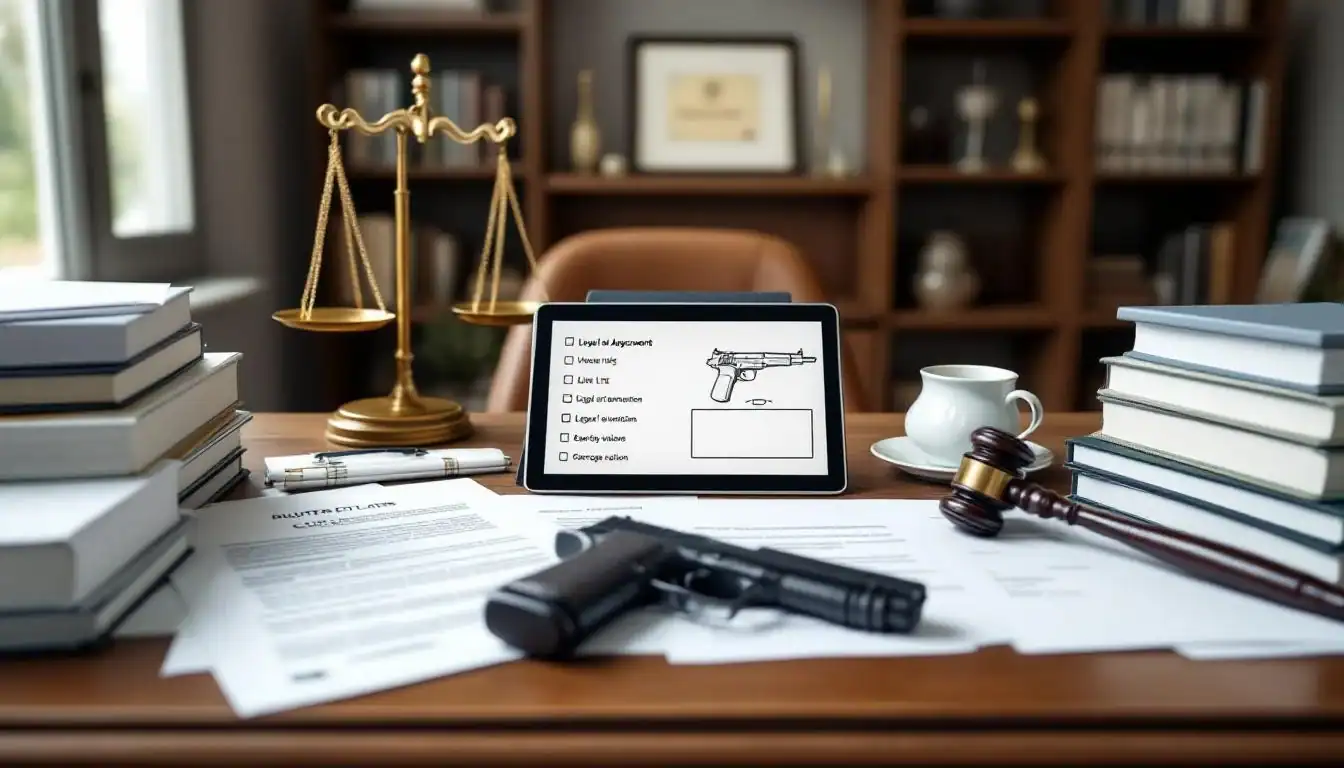
Carrying a firearm comes with serious responsibility, and understanding the legal basics for shooters is where that responsibility starts. Laws vary dramatically from state to state, and what’s legal in one place might get you in trouble in another.
At Cloudster Pillow, we know that comfortable, confident carry means knowing your rights and obligations. This guide breaks down the essentials you need to know about self-defense laws, permits, and firearm storage.
What Self-Defense Laws Actually Mean for Your Carry
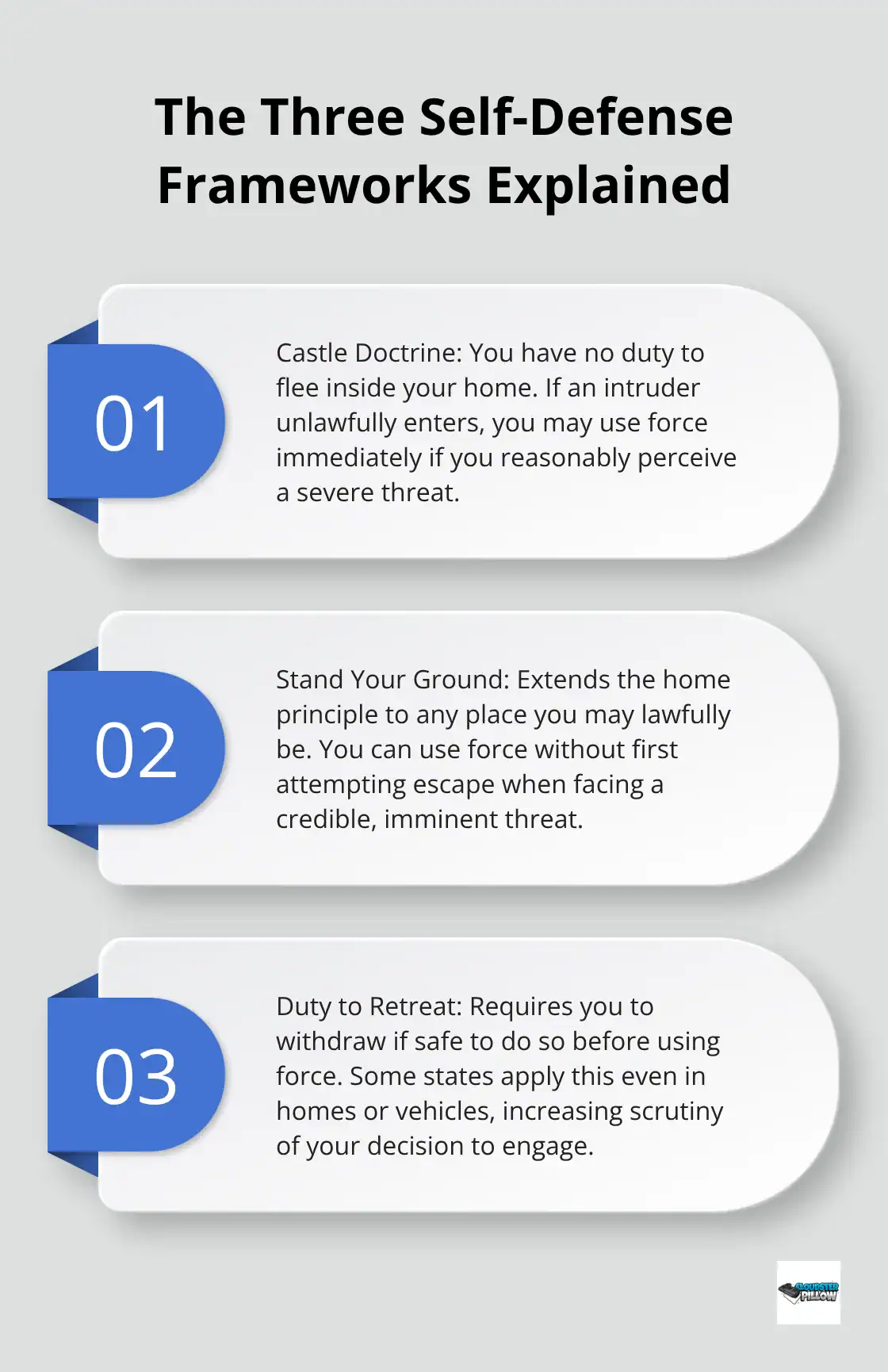
Your state’s self-defense laws determine whether you can legally use your firearm and under what circumstances. Three legal frameworks govern this: Castle Doctrine, Stand Your Ground, and duty to retreat. Castle Doctrine states you have no obligation to flee from your own home before using force-if an intruder enters, you can defend yourself immediately. Stand Your Ground extends this principle beyond your home, allowing you to use force anywhere you have a legal right to be, without first attempting escape. Duty to retreat laws require you to withdraw if safely possible before using force, even in your own home or vehicle. As of 2024, over half the states in the U.S. have adopted Stand Your Ground laws, while others require retreat attempts first.
The legal standard for force varies too: most states allow force proportional to the threat, meaning you can use lethal force only if facing death or serious bodily injury. Some states specify imminent threat language, requiring the danger to be immediate and unavoidable. Your state’s specific wording matters enormously in court-vague language creates legal risk. A firearms attorney in your state charges $200–500 for a consultation but clarifies exactly when force is justified. Many states publish self-defense guides through their attorney general’s office, and organizations like the National Rifle Association provide state-by-state breakdowns of use-of-force standards.
How Your Firearm’s Appearance Affects Legal Outcomes
Courtroom perception influences juries significantly, and your firearm’s markings or modifications can work against you if the case goes to trial. Aggressive engravings, tactical finishes, or custom modifications might suggest you carried looking for conflict rather than for legitimate self-defense. Choose firearms with standard finishes and minimal branding if possible. This principle applies equally to holster selection-a tactical chest rig might be legally appropriate for home defense but visually aggressive in court, while an inside-the-waistband holster presents as responsible and discreet. Concealment signals responsible, everyday carry rather than confrontational intent.
Know Your Threat Identification Rules
Your state’s laws require you to know your target and what’s beyond it before firing-this is both a safety rule and a legal requirement. Shooting through walls creates overpenetration risk and legal liability if rounds hit unintended targets. Defensive shootings often occur in low-light conditions, making threat identification harder when visibility drops. A quality weapon-mounted light lets you confirm the threat is actually a threat before you fire. Some states have specific duty-to-identify laws requiring you to confirm imminent danger before using force. Shooting at shadows or sounds without visual confirmation can result in criminal charges even if you believed you faced a threat. Training courses emphasizing low-light threat identification cost $150–400 but teach you how to assess situations legally and safely.
Why Your Permit Status Matters in Court
Your concealed carry permit (or lack thereof) influences how prosecutors and juries view your actions. Permit holders demonstrate they passed background checks and completed required training, which strengthens your legal position if you ever need to defend yourself. Permitless carry states allow you to carry without a permit, but this doesn’t eliminate legal obligations-you still must follow all use-of-force laws and threat identification rules. If you carry across state lines, your permit’s reciprocity status determines whether you’re legal in each state you enter. Carrying in a state where your permit isn’t recognized creates serious criminal exposure. Before traveling, verify your permit’s status in each state you’ll visit through your state’s attorney general’s office or a firearms law resource. This step takes 15 minutes but prevents felony charges.
Preparing for the Legal Aftermath
If you ever use your firearm in self-defense, the legal process begins immediately. Your firearm becomes evidence, your holster choice and carry method become scrutinized, and your training history matters enormously. Juries want to see that you trained regularly, carried responsibly, and used force only when absolutely necessary. An inside-the-waistband holster demonstrates daily carry discipline, while sloppy carry methods suggest carelessness. Understanding concealed carry insurance and legal defense coverage protects you financially if you face charges after a self-defense incident.
Concealed Carry Permits and Licensing Requirements
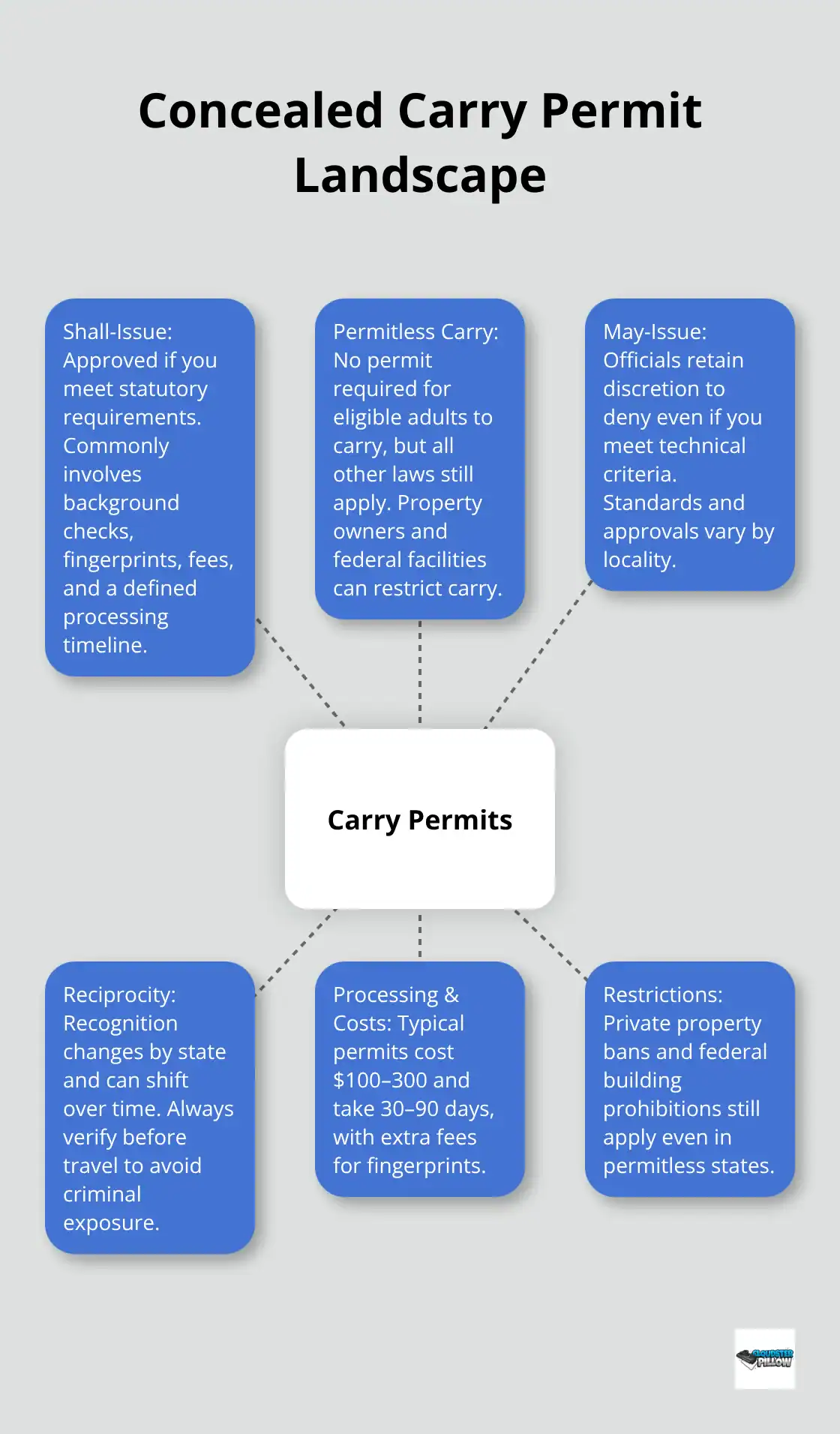
Your path to legal carry starts with understanding your state’s permitting system, and this varies dramatically across the country. Most states fall into one of three categories: shall-issue states that must approve your permit if you meet basic requirements, permitless carry states that allow you to carry without any permit at all, and may-issue states where officials have discretion to deny permits even if you meet technical requirements. As of 2024, roughly 25 states have adopted permitless carry, 20 states operate shall-issue systems, and a handful remain may-issue.
Understanding Your State’s Permitting System
The shall-issue model typically costs $100–300 for the permit itself and takes 30–90 days to process, though some states like Florida process permits within weeks. Permitless carry states like Texas and Florida eliminated their permit requirements in recent years, but this doesn’t mean you can carry anywhere without restrictions-private property owners can still prohibit firearms, and federal buildings remain off-limits. If you live in a shall-issue state, the application process requires submitting fingerprints through your local sheriff’s office or a designated vendor, which costs $15–50 extra.
Your background check pulls records from the FBI’s National Crime Information Center database, and disqualifying factors include felony convictions and domestic violence restraining orders. The entire process is straightforward if you have a clean record, but delays happen when fingerprints are rejected or submitted incorrectly-using an official fingerprinting service rather than DIY options prevents this headache.
Navigating Reciprocity Across State Lines
Reciprocity between states creates real complexity when you travel, and ignoring it can turn you into a criminal instantly. Your permit valid in your home state might be worthless 50 miles away, and reciprocity agreements vary wildly-some states honor permits from all other states, while others recognize only specific states or none at all. Florida permits, for example, are recognized in 38 states, making them popular for frequent travelers, while California recognizes zero permits from other states and requires residents to obtain California-issued permits.
Before any interstate travel, check your specific permit’s status through your state’s attorney general’s website or resources like USA Carry, which maintains detailed reciprocity maps. A 10-minute verification prevents carrying illegally across state lines, which creates felony exposure in states like New York and California where unlicensed carry is a serious crime.
Strategic Permit Planning for Frequent Travelers
If you frequently cross state lines for work or family, consider whether getting a Florida or Utah nonresident permit makes sense-both cost around $150–200 and provide broader reciprocity than most home-state permits. Some carriers use multiple permits from different states to maximize coverage, though this requires maintaining separate applications and renewal schedules. The reciprocity landscape shifts constantly as states update their laws, so checking before each trip rather than relying on outdated information keeps you legal.
Inside-the-waistband holsters enhance your ability to carry discreetly during long interstate drives, where comfort becomes critical during 8–10 hour stretches in a vehicle. Solutions like those from Cloudster Pillow help everyday CCW users achieve real comfort and confidence throughout extended carry periods, making legal compliance feel natural rather than burdensome. With your permit status verified and your carry method optimized for comfort, you’re ready to address the practical side of firearm ownership-how to store and transport your weapons legally.
Firearm Storage and Transportation Laws
Firearm storage laws vary dramatically by state, and violations create both safety and legal liability. Some states mandate locked storage when children are present, while others impose no requirements at all-but responsible carry means storing your firearms securely regardless of what your state legally requires. At home, a quality safe or lockable case prevents unauthorized access and demonstrates you took reasonable precautions if something goes wrong. The cost ranges from $150 for a basic pistol safe to $1,500+ for a full-size gun safe, but this investment protects both your family and your legal position.
Securing Your Firearm at Home
A bedside safe costs $80–200 and provides immediate access while keeping your firearm secure from unauthorized hands. Many CCW carriers make the mistake of keeping a loaded firearm in an unlocked nightstand, which creates catastrophic liability if a child or intruder accesses it. When you store a firearm at home, you must lock it in a case or safe separate from ammunition in states like California, while others specify ammunition must sit in a different location entirely. Responsible carry means securing your firearm even in states with no legal storage requirements-this protects your family and strengthens your legal position if an accident occurs.
Legal Transportation in Your Vehicle
Federal law requires you to transport firearms unloaded and locked in a case separate from ammunition-this applies everywhere, even in permitless carry states. Your vehicle’s glove box does not count as locked storage; you need a hard case or a safe bolted to your vehicle. Some states like California require firearms to sit in a locked container or with a cable lock during transport. The critical mistake many CCW carriers make is keeping a firearm accessible during drives, which turns them into felons instantly in restrictive states.
Interstate Travel with Firearms
The Firearm Owners Protection Act allows you to transport unloaded firearms through states where you cannot legally carry, but only if your firearm sits locked in a case and you travel between two places where possession is legal. This means you cannot stop for extended periods in anti-gun states-quick fuel stops are generally acceptable, but staying overnight creates legal exposure. Your route matters significantly; taking a detour through a restrictive state when a legal route exists strengthens prosecution arguments if law enforcement stops you. Some states prohibit certain firearm types (California bans many modern rifles), so arriving with a prohibited firearm creates immediate felony charges.
Planning Your Interstate Journey
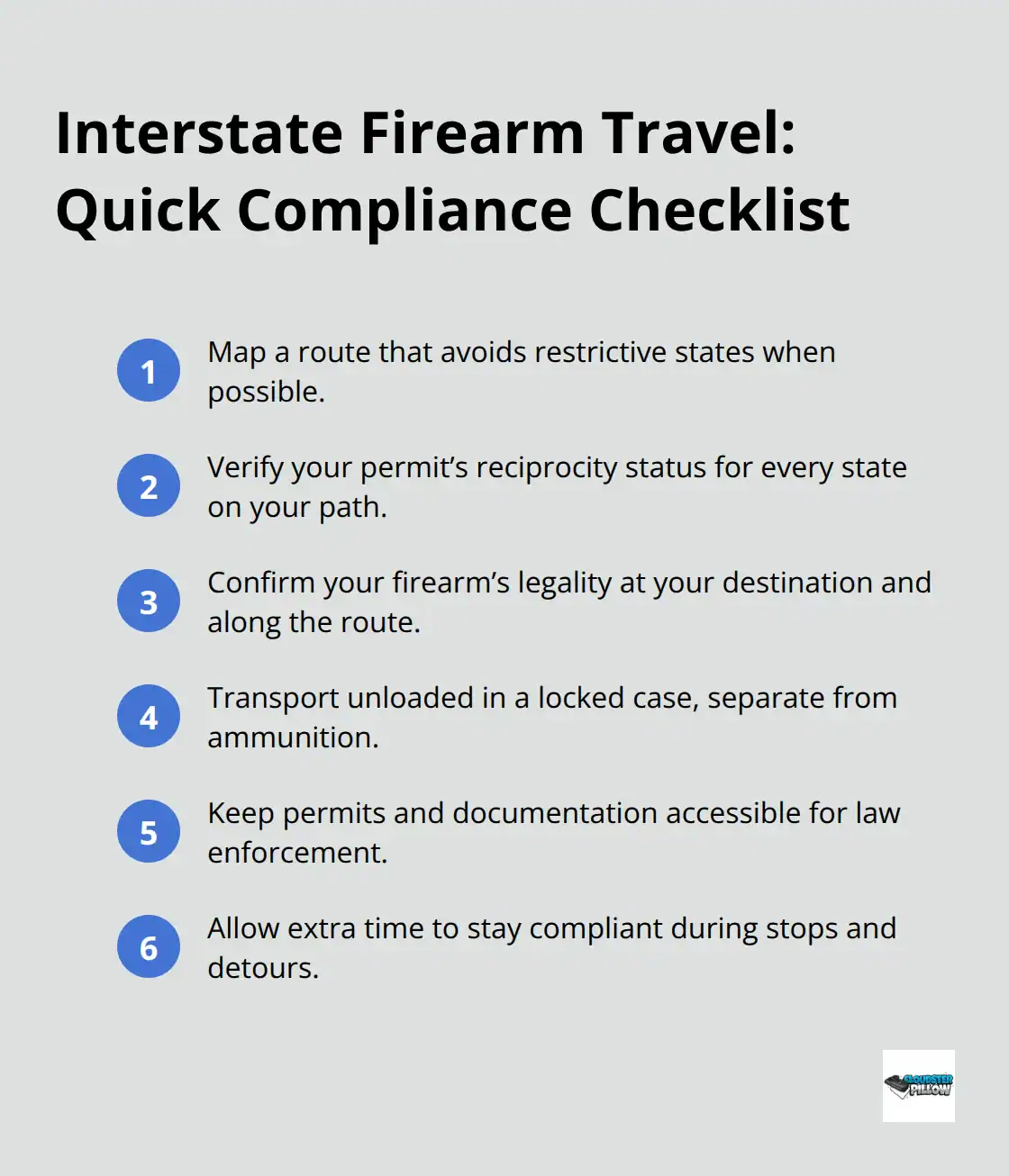
Before any interstate travel, map your route using reciprocity resources, verify your permit status in each state you will pass through, and confirm your firearm’s legal status in your destination state. Store your firearm in a locked case separate from ammunition during the entire journey, and keep your permit and documentation accessible for law enforcement. This preparation takes an hour but prevents criminal exposure that could cost you thousands in legal fees.
Many carriers traveling through hostile states like New York or Illinois make the critical error of keeping a firearm accessible during the drive, which creates instant felony liability.
Final Thoughts
Legal basics for shooters boil down to three core principles: know your state’s self-defense laws, verify your permit status before carrying anywhere, and store your firearms securely. These three actions prevent the vast majority of legal problems that CCW carriers face. Your state’s specific rules on Castle Doctrine, Stand Your Ground, or duty to retreat determine whether you can legally defend yourself, and ignorance won’t protect you in court.
Your permit’s reciprocity status determines whether you’re legal crossing state lines, and carrying in a state where your permit isn’t recognized turns you into a criminal instantly. Staying updated on local laws requires checking your state attorney general’s website annually, since laws change constantly. Organizations like the National Rifle Association publish state-by-state legal guides, and many states offer free self-defense law summaries through their official channels.
Legal knowledge separates responsible carriers from reckless ones-you can own the best firearm and carry it in the most comfortable holster, but without understanding your legal obligations, you’re operating blind. Comfortable, confident carry means knowing exactly when you can use force, where you can carry, and how to transport your firearm legally. Explore how holster wedges enhance your daily carry while you focus on what matters most: training, mindset, and staying prepared.
Built for all-day concealed carry comfort.
The Cloudster Pillow uses adjustable shredded cooling-gel memory foam in a soft fabric cover, so you can dial in the exact thickness for your body and your holster.
