
AIWB, AIWB Holster Wedge, IWB Holster Wedge
All Day Carry Comfort: Secrets To All Day Confidence
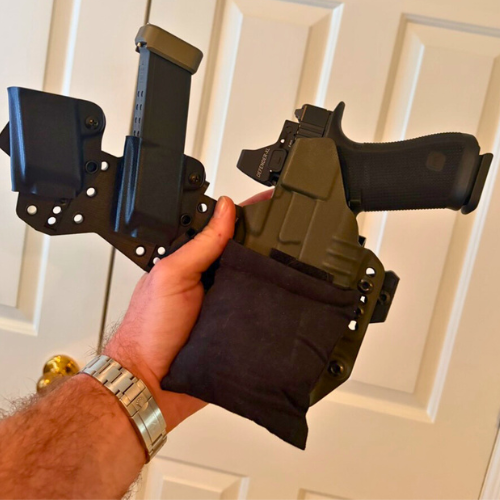

Carrying a firearm every day means your holster setup has to work as hard as you do. When your everyday carry setup causes discomfort, you’re more likely to leave it at home-and that defeats the purpose entirely.
At Cloudster Pillow, we’ve seen firsthand how small comfort improvements transform carry habits. The right adjustments mean you can focus on your day instead of constantly fiddling with your gear.
Why Comfort Determines if You Actually Carry
Discomfort Stops Carriers Cold
Discomfort isn’t just annoying-it’s the reason your firearm stays home. When your holster digs into your ribs during a long workday or shifts every time you sit down, you face a choice: keep adjusting it or leave it behind. Inconsistent carry habits leave you less prepared. This isn’t about toughness or commitment. Your body simply rejects repeated discomfort, and your brain learns to avoid the source.
Mental Fatigue Undermines Your Confidence
The mental toll compounds this problem significantly. Constant micro-adjustments throughout the day-pulling your holster back into position, shifting your belt, tugging your shirt-drain your attention and create anxiety about printing. You’re not focused on your day or your training; you’re focused on managing your gear. This mental fatigue undermines the confidence that makes carrying worthwhile.
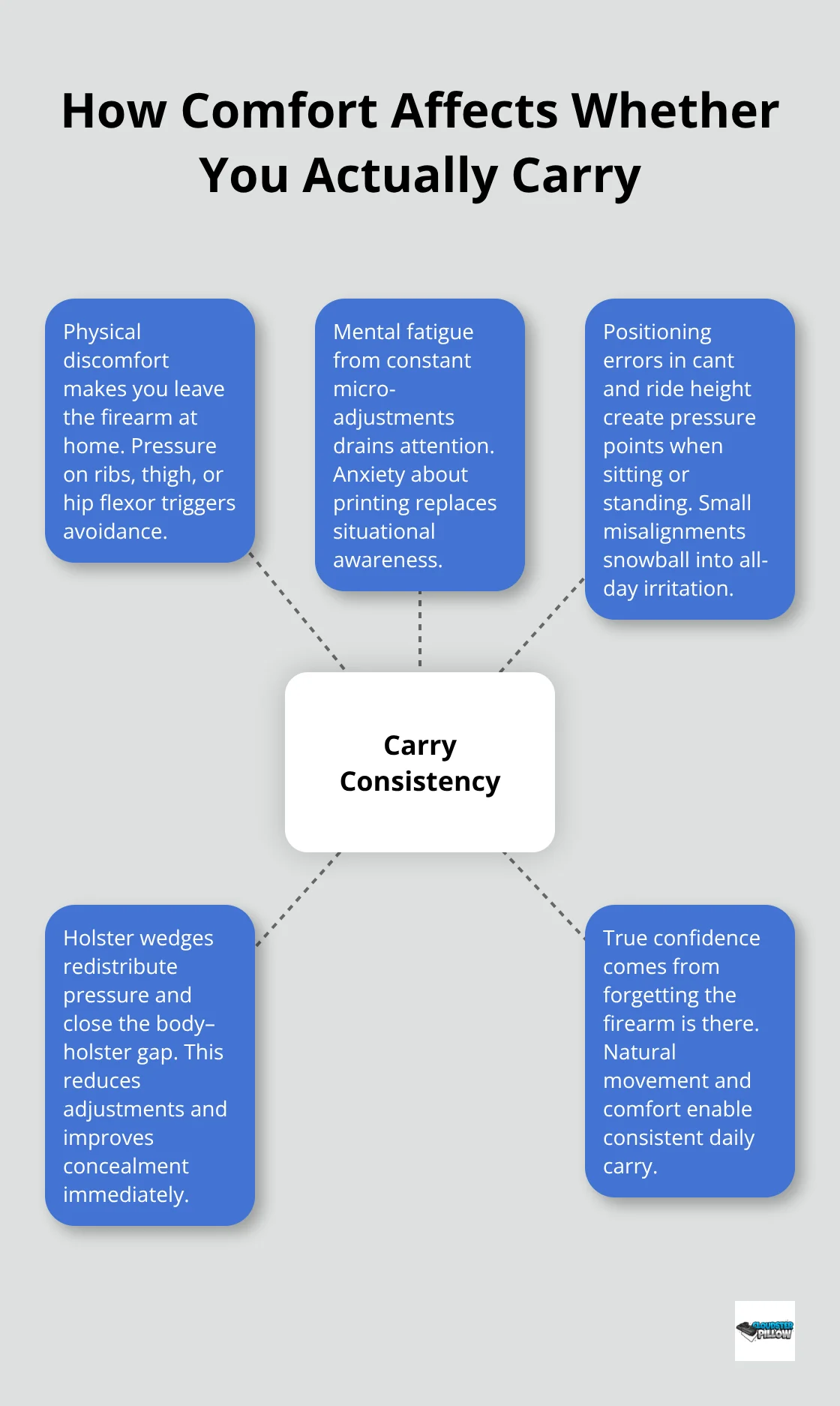
Real confidence comes from forgetting your firearm is there. When your setup works, you don’t think about it. You move naturally, sit comfortably, and maintain your awareness without distraction.
Positioning Matters More Than You Think
Cant and ride height directly influence this outcome. A holster positioned too low creates pressure on your thigh during sitting; too high and it digs into your ribcage when standing. Most carriers find their sweet spot between 11 o’clock and 1 o’clock for AIWB carry, but this varies based on body type, clothing, and activity level. The wrong positioning forces constant adjustment.
Holster wedges address this by redistributing pressure away from sensitive areas and reducing the gap between your body and the holster. This small addition can be the difference between carrying all day and ditching your setup by noon. Wedges designed for everyday carriers eliminate the adjustments that destroy confidence and consistency.
Your Next Step: Finding Your Ideal Setup
The path to all-day confidence starts with understanding how your body responds to different holster positions and accessories. Once you identify what works for your frame and lifestyle, you can move forward with the practical solutions that actually stick. Consider adding a holster wedge like the Cloudster Pillow to enhance your comfort and concealment for true all-day carry.
The Science Behind Holster Comfort and Proper Positioning
How Your Body Adapts to Holster Pressure
Your body’s response to holster pressure changes over hours and days in ways most carriers don’t anticipate. When weight sits against your side or abdomen, your muscles and soft tissue gradually compress and adapt to the load. A holster that feels fine during the first hour may create noticeable pressure points by hour six because your body has shifted and settled around the gear. This is why cant and ride height matter so much-they determine where that pressure concentrates. A holster canted too far forward pushes the grip into your abdomen; too far back and it digs into your ribs when you sit. Ride height that’s too high creates a pressure point at your ribcage, while too low forces pressure onto your thigh and hip flexor during sitting. Most carriers find their ideal cant sits between 3 and 5 o’clock, but your specific angle depends on your torso length, hip width, and how you spend your day. If you work at a desk, lower ride height with moderate cant reduces rib pressure during seated positions. If you’re active and moving, higher ride height with slightly more cant improves comfort during dynamic movement. The first week of carry usually reveals these pressure points-pay attention to where discomfort develops and adjust accordingly rather than pushing through it.
Finding Your Ideal Cant and Ride Height
Small adjustments to cant and ride height positioning transform your all-day experience. Start with a baseline position, then adjust cant or ride height by a quarter-inch and carry for a full day before making another change. This approach prevents the frustration of multiple adjustments at once, which makes it impossible to identify what actually helped. Most carriers find their sweet spot within two to three weeks of intentional testing. Your torso length, hip width, and daily activities all influence what works best for your frame. Test different angles methodically rather than guessing, and you’ll discover the position that eliminates pressure points without sacrificing draw speed or concealment.
How Holster Wedges Accelerate Your Comfort
Holster wedges accelerate this process significantly because they redistribute pressure away from sensitive areas without requiring major position changes. A quality wedge fills the gap between your body and the holster, padding contact points and pushing the grip closer to your body for better concealment. The wedge works with your existing setup-no new holster purchase required-and the adjustment is immediate. Most carriers report noticeable comfort improvement within the first day of use, which means you can identify whether pressure-point issues stem from holster position or from gaps in your current setup. This immediate feedback helps you make informed decisions about what adjustments actually solve your discomfort rather than chasing solutions that don’t address your specific problem.
Testing Your Setup for Real Results
Breaking in a holster setup means methodically testing small adjustments and noting what changes your comfort level. Track where discomfort develops throughout your day and adjust one variable at a time. This systematic approach reveals patterns that random tweaks never will. After a few weeks of intentional testing, you’ll understand exactly how your body responds to different positions and pressure distributions.
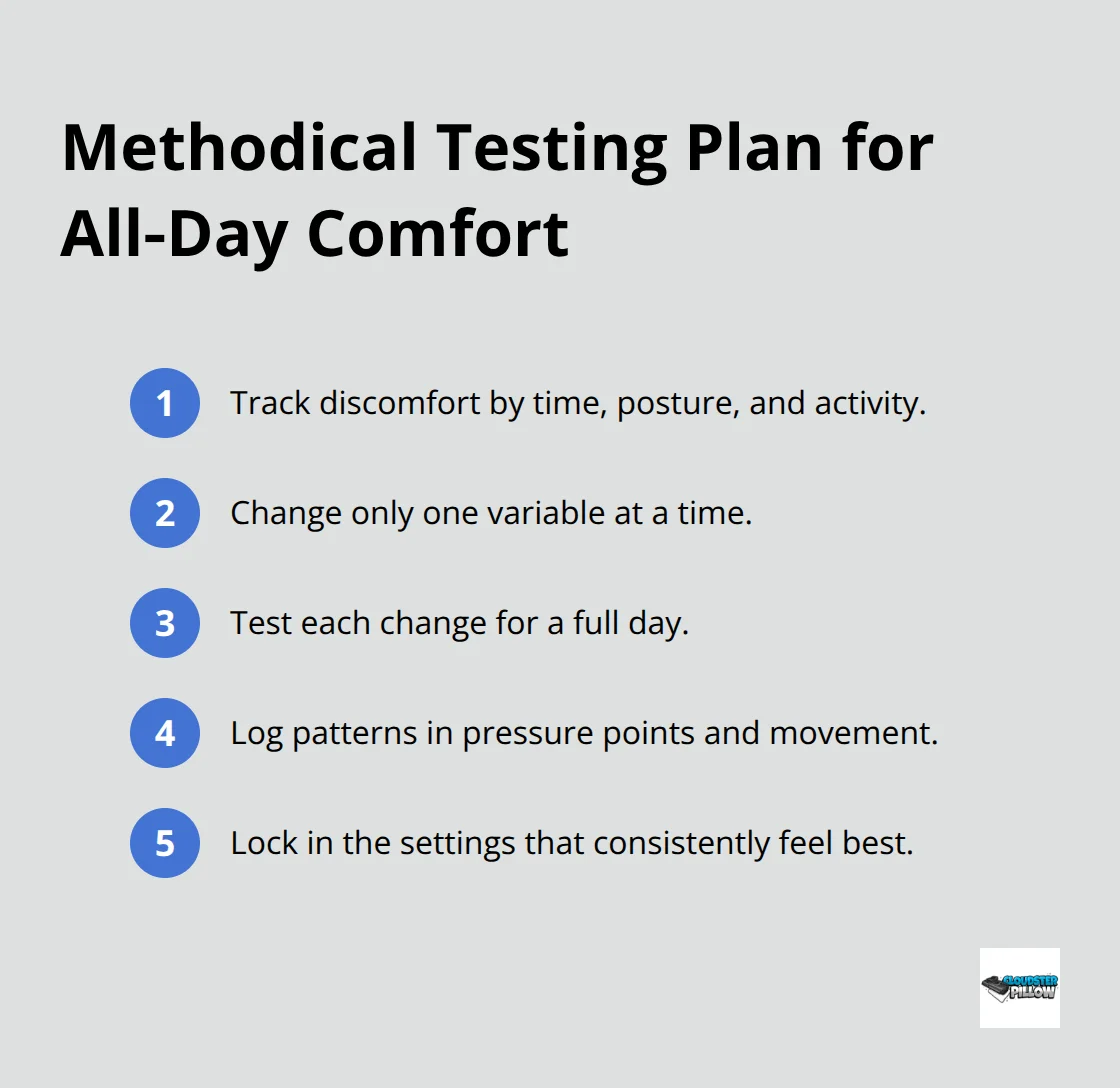
Once you identify your ideal setup, you can move forward with confidence knowing your gear works for your specific frame and lifestyle rather than hoping a generic recommendation applies to you.
How to Match Your Holster Setup to Your Body
Your Body Type Determines What Works
Your body type determines what works and what doesn’t, making one-size-fits-all advice useless for real carry. Carriers with shorter torsos and wider hips need different positioning than taller, narrower builds. If you’re shorter with a wider midsection, AIWB carry positioning often works better when positioned closer to 12 o’clock rather than the standard 1–2 o’clock recommendation, because your hip angle and ribcage geometry differ from taller carriers. Taller carriers typically find 1–2 o’clock more natural because their torso length accommodates that angle without rib pressure.
Test your positioning with full eight-hour workdays, not just weekend trips, because sitting at a desk reveals pressure points that standing activities mask. Your ride height should sit low enough that the grip doesn’t dig into your ribcage when seated, but high enough that you can draw smoothly without fumbling.
Finding Your Cant and Ride Height
Most carriers need between 10 and 15 degrees of cant, but your specific angle depends on your hip width and how you bend forward during daily movement. If you spend significant time driving, lower ride height with 10–12 degrees of cant reduces pressure against your seat. If you’re frequently bending or lifting, slightly higher ride height with 13–15 degrees of cant improves retention and comfort during dynamic positions.
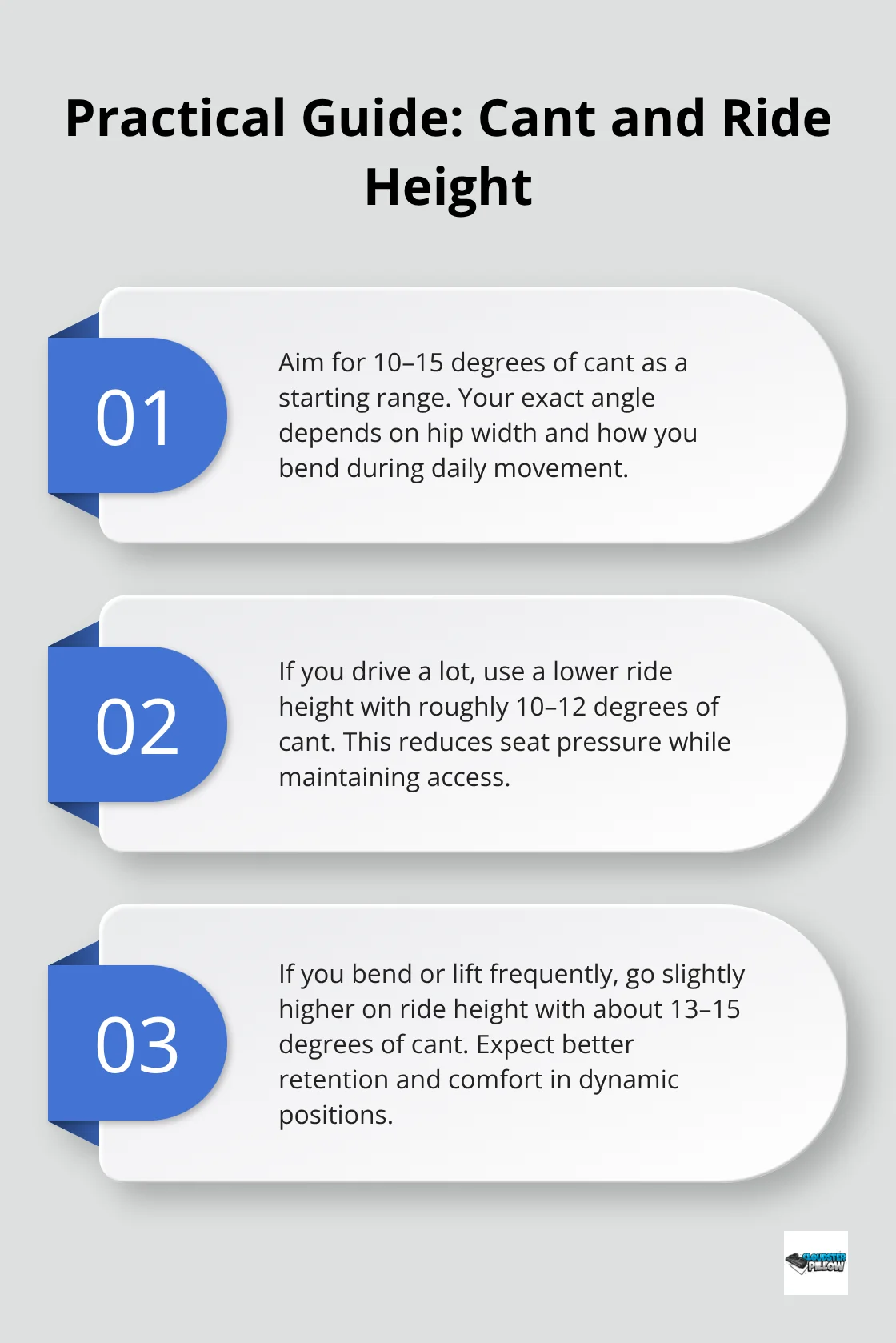
Don’t rely on what works for your shooting buddy or what online forums claim is standard. Your frame is unique, and discovering your actual sweet spot takes methodical testing over two to three weeks.
Holster Wedges Accelerate Your Comfort Discovery
Holster wedges accelerate this process because they fill gaps between your body and holster without requiring position changes. A quality wedge redistributes pressure away from your ribs, hipbone, and thigh flexor, which means you can identify whether discomfort stems from poor positioning or from gaps in your current setup. Most carriers report meaningful comfort improvement within the first day, making wedges an essential diagnostic tool before investing in a new holster.
Clothing Choices Shape Your Results
Your clothing choices matter equally because loose shirts and hoodies conceal AIWB carry far better than fitted clothing, while tucked business shirts work well for IWB positions. Layering with a light undershirt creates friction that reduces holster shift, while a second outer layer provides concealment without adding bulk.
Test different shirt materials and fits during your positioning trials because cotton stretches differently than synthetic blends, affecting how your holster sits throughout the day. Avoid wearing the same clothing for consecutive days of testing because you need varied conditions to understand how your setup performs across different wardrobe choices.
Solving Printing Problems Immediately
If you’re struggling with printing problems, carrying inside the waistband reduces visibility compared to outside-the-waistband options. After two to three weeks of systematic testing with adjusted positions and proper accessories, you’ll know exactly what your body needs for true all-day comfort rather than guessing based on generic recommendations.
Final Thoughts
Your commitment to everyday carry depends entirely on whether your setup feels natural throughout the day. When discomfort forces constant adjustments, you fight your own gear instead of focusing on preparedness and training. The carriers who maintain consistent habits aren’t tougher or more disciplined-they’ve simply solved their comfort problems through methodical testing and the right accessories.
Small adjustments compound into real results. A quarter-inch change in ride height, a slight cant adjustment, or adding a quality holster wedge transforms your experience from frustrating to sustainable. You don’t need a new holster or a complete gear overhaul-you need to identify what your specific body type requires and implement solutions that work for your frame and lifestyle.
We at Cloudster Pillow designed our holster wedges specifically for everyday carriers who want comfort without replacing their entire setup. Our wedges redistribute pressure away from sensitive areas, reduce printing, and improve concealment immediately, so visit Cloudster Pillow to explore how a quality wedge accelerates your path to all-day confidence and helps you carry consistently without compromise.

Pingback: Holster Width Adjustments for CCW | Cloudster Pillow Guide