Holsters and Gear Recommendations
Light-Bearing Holster Guide: Pros, Cons, Comfort and Fit
Quick answer: A light-bearing holster is made to fit your pistol with its weapon-mounted light attached, so it holds the gun and light together. It makes the light usable for identifying a threat in the dark, but adds bulk, length and weight. Pick the holster before the light, then plan for comfort when sitting, a stiffer belt and clothing that covers more.
What Is a Light-Bearing Holster?
Guerrilla Tactical puts it plainly: “A light-bearing holster is designed specifically to accommodate a firearm with a weapon-mounted light attached. Instead of indexing only on the firearm’s frame, the holster locks onto both the gun and light combination.” Falco describes the same thing from the shape side: these holsters “usually feature a space or channel in the holster body to accommodate the light.”
Holsters are made for specific lights. Blade-Tech, for example, says its range is “engineered to support popular tactical lights such as the Streamlight TLR-1, Streamlight TLR-7A, and Surefire X300.” A few designs work either way: DeSantis says its Light Bearing Raptor “secures the Glock® pistol with or without the light attached,” and Blade-Tech says the same of its Valor duty holster (see our duty holster guide). For a pistol with a slim rail, see our Glock 43X holster guide; for a Glock 19 with a light, our Glock 19 holster guide. For one gun-specific example, see our Hellcat Pro holster guide.
Pros and Cons
| Pros (Guerrilla Tactical) | Cons (Guerrilla Tactical) |
|---|---|
| “A weapon-mounted light allows you to clearly identify threats in low-light environments without relying on handheld flashlights or guesswork.” | “Adding a light increases the footprint of the gun, which can make concealment harder—especially in tighter clothing.” |
| “consistent indexing, repeatable draw stroke, and fewer steps under stress” | “Not every holster supports every light/weapon combo” |
| Training with the real setup “builds more realistic muscle memory.” | “A light adds length and rigidity to the front of the firearm,” which can “Press into the abdomen when seated.” |
Comfort: Sitting and Driving
Guerrilla Tactical calls comfort “where many carriers notice the biggest difference.” It says a light-bearing setup “increases forward mass,” which can cause “Pressure against the lower abdomen” when seated, and that a light can “Make appendix carry more sensitive without proper holster design.” While driving, a light-bearing holster can “Press into the seat or seatbelt line.”
Its fixes: “Many users find a slightly higher ride height or small cant adjustment improves comfort significantly,” and appendix carriers “may also experiment with shifting the holster slightly off-center while driving.” It also warns against the usual reaction to printing: “tightening the belt too much, which often reduces comfort and increases pressure points instead of solving concealment problems.” Our guide to why appendix carry is uncomfortable covers more of these, and our AIWB holster guide covers what to look for in an appendix holster.
A Bigger Holster Needs a Bigger Pad
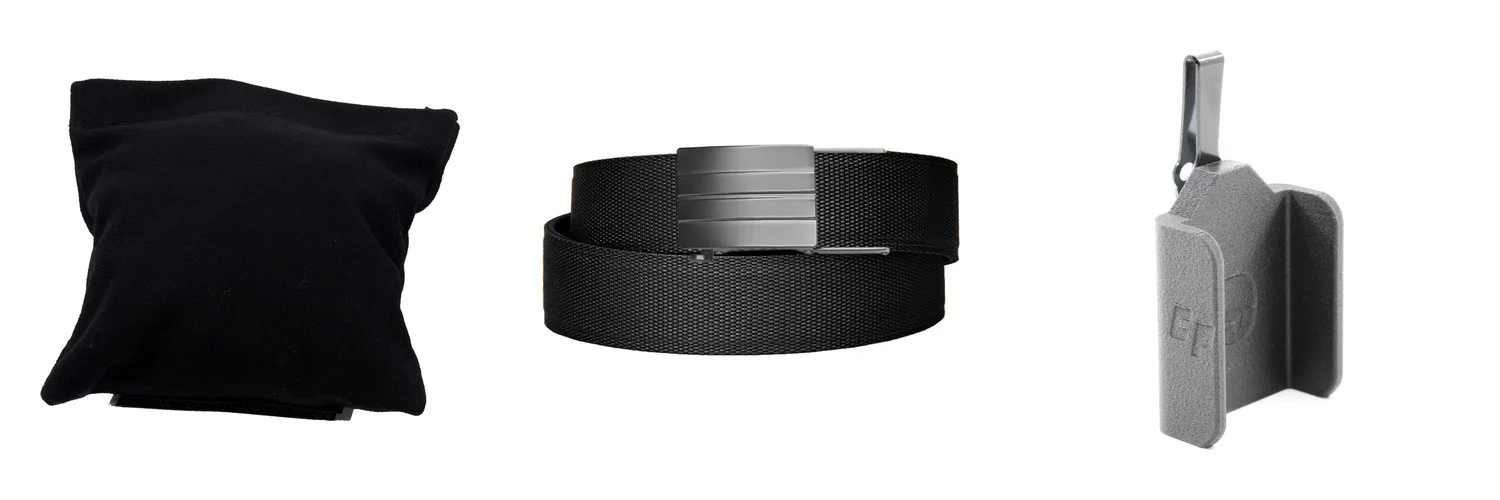
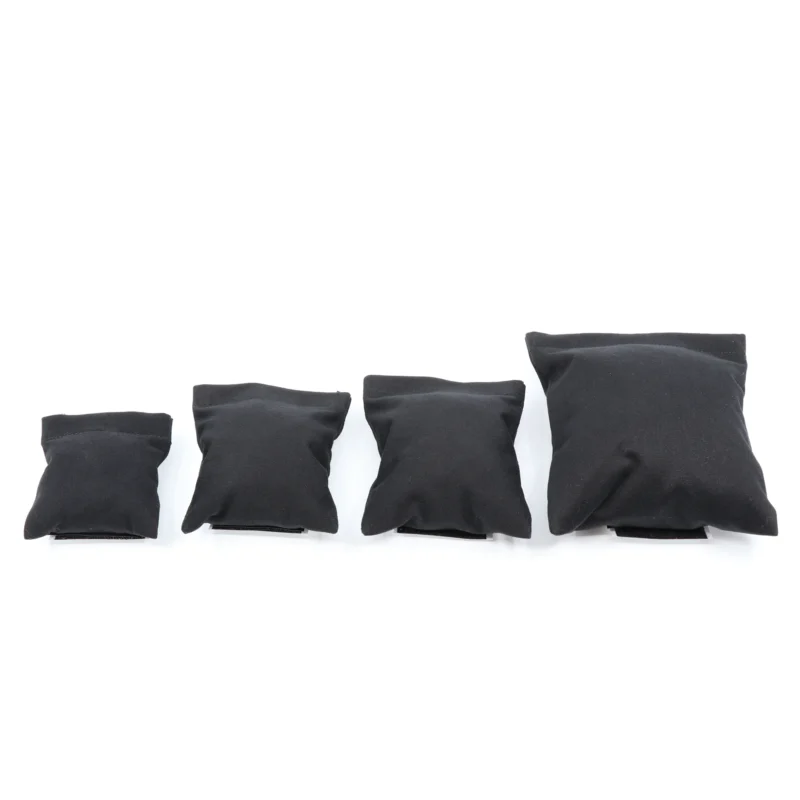
Because the light “increases the footprint of the gun,” the holster is bigger too. The Cloudster Pillow holster wedge comes in four sizes. On the Dark Cloudster Pillow page, the Deluxe is listed for “larger holsters, light-bearing models, or wider sidecars,” and the Monster for “extra-wide sidecar rigs, full-size light-bearing setups.” The fill is memory foam you can add or remove, it angles the grip into your body, and the hook-and-loop backing mounts to any IWB or AIWB holster.
Belt Support Matters More
Guerrilla Tactical: “More weight = more inertia during quick movement,” and “Proper belt support becomes more important.”
The Kore Black Tactical Nylon Gun Belt, one of the Kore gun belts we carry, is rated by Kore for “Up to 10 lbs. • IWB, OWB or Appendix,” at “1.5″ / 5mm” with a “Power-Core™ Center for Added Stiffness and Support.” Its track has “40+ positions in ¼″ increments,” so you can adjust tension in small steps.
Clothing for Light-Bearing Carry
- Tight clothing “Increases printing risk” and “Transfers light bulk directly to fabric.”
- Button-down shirts and jackets are “One of the best concealment options” and “Allow light-bearing setups to disappear more easily.”
- T-shirts are the “Most challenging option” and “Often benefits from slightly smaller lights or refined ride height adjustments.”
All three from Guerrilla Tactical. For more on hiding the outline, see our guide to stopping printing.
Common Mistakes
- Choosing the light first. Guerrilla Tactical calls this “the biggest mistake”: “holster compatibility should guide your light selection—not the other way around.”
- Ignoring ride height and cant. “Small adjustments can dramatically improve comfort, especially while sitting or driving.”
- Over-tightening the belt to stop printing.
- Assuming every holster handles a light the same way. “Retention, molding precision, and trigger guard coverage vary widely between manufacturers.”
- Not training with the actual setup. “A light-bearing holster changes draw dynamics slightly.”
Light-Bearing Holster: Questions People Ask
Can I use a light-bearing holster without the light?
Only if the maker says so. Some designs, such as the DeSantis Light Bearing Raptor and Blade-Tech Valor, state they hold the gun with or without the light.
Will any holster fit my gun with a light?
No. It has to be made for your gun and light combination; Guerrilla Tactical notes “Not every holster supports every light/weapon combo.” A few universal holsters, such as the Blackhawk Omnivore, come in versions for named lights.
Can I carry a light-bearing holster appendix?
Yes, but expect more pressure when seated. Guerrilla Tactical suggests a slightly higher ride height or a small cant adjustment.
Can I tuck a shirt over a light-bearing holster?
Some can: DeSantis sells optional tuckable IWB adaptors for the Light Bearing Raptor. See our tuckable holster guide.
Written by the Cloudster Pillow team. We make the Cloudster Pillow and the Cloudster magnetic mag carriers, and carry Kore belts. We don’t sell holsters, lights or firearms, and no maker paid to be mentioned here. This is general information, not a substitute for professional training; check the carry laws where you live.