
Licensing and Cost-Saving Tips
How to Get a CCW in California (2026): Steps and Rules
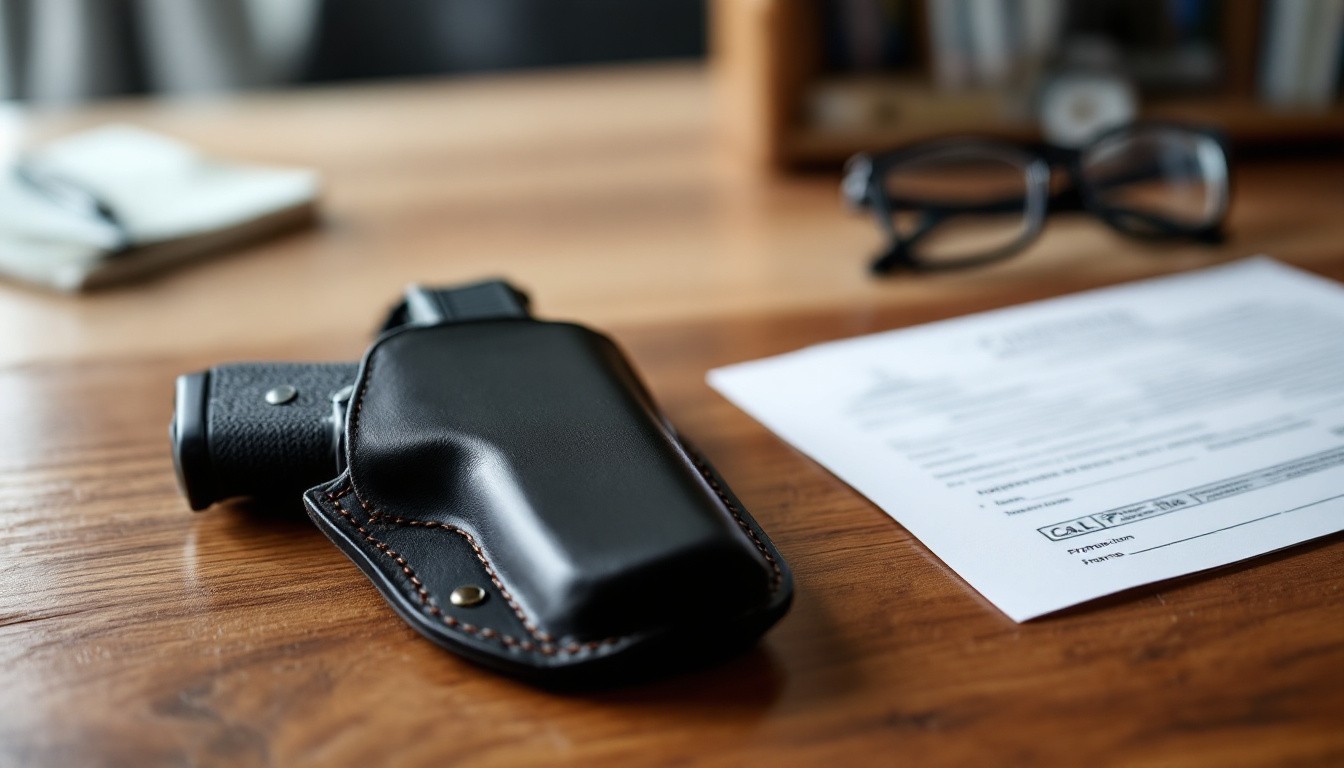
Quick answer: You apply to your county sheriff or your city’s police chief. California law says the agency “shall issue” a license if you are 21 or older, live in that county or city (or, for a sheriff’s license, work there), are not a “disqualified person,” finish a training course of at least 16 hours, and are the recorded owner of each handgun on the license. The agency has 90 days from a complete application to give its first decision. A license lasts up to two years. Renewal needs at least 8 hours of training. California does not honor permits from other states. Many places stay off-limits, and some of those rules are still in federal court.
Checked against the California Penal Code, California Department of Justice (DOJ) pages and federal court records on October 3, 2026.
What changed: SB 2 and the 2026 updates
In 2022, the U.S. Supreme Court’s Bruen decision held that New York’s carry-license law violated the Second Amendment. In its 2026 Wolford opinion, the Court noted that Bruen had named six other jurisdictions with laws like New York’s, and California was one of them. California answered with Senate Bill 2, signed September 26, 2023. The Legislature’s own summary says the bill would “remove the good character and good cause requirements from the issuance criteria.” SB 2’s changes to the license sections took effect January 1, 2024.
AB 1078, effective January 1, 2026, opened licenses to non-residents, added denial grounds, and added fingerprints to renewals sent to DOJ from September 1, 2026.
Who is eligible
Under Penal Code 26150 (sheriffs) and 26155 (police chiefs), a California resident must show all of these:
- You are not a disqualified person under Penal Code 26202.
- You are at least 21 and can prove who you are and how old you are.
- You live in the county or city. For a sheriff’s license, the county can also be your main place of work or business if you spend a lot of time there.
- You have finished the training required by Penal Code 26165.
- You are the recorded owner, with DOJ, of each handgun the license will cover.
Penal Code 26202 lists who is disqualified. It includes anyone “reasonably likely to be a danger to self, others, or the community at large,” plus some restraining orders, some recent convictions and current drug or alcohol abuse. Read the full list before you apply.
Non-residents: since January 1, 2026, a sheriff or police chief may license a non-resident who is 21 or older, swears that their area is where they will mainly spend time in California, and completes the training and live fire. DOJ’s public FAQ still says licenses go only to residents. That page lags the statute.
Step by step
| Step | What happens | Source |
|---|---|---|
| 1. Apply | File the statewide form, BOF 4012, with your sheriff or police department. Knowingly false answers are a crime (PC 26180). | PC 26175, 26180; BOF 4012 |
| 2. Pay the first fees | A DOJ fee, plus a local fee capped at the agency’s “reasonable costs.” Up to half the local fee is due when you file. The rest is due when the license is issued. | PC 26190 |
| 3. Investigation and interviews | For new applications, interviews of you and at least three character references are mandatory. You can be interviewed in person or by video. The agency also reviews your public posts. | PC 26202(b); BOF 4012 |
| 4. First decision | Within 90 days of a complete application, the agency must tell you in writing whether you look disqualified. If you don’t, you’re told to go ahead with training. | PC 26202(d) |
| 5. Training | At least 16 hours, live fire with each handgun, and a written test. You can’t be made to pay for training before the first decision. | PC 26165 |
| 6. Fingerprints and DOJ check | Your fingerprints go to DOJ. No license can be issued until DOJ confirms you may legally own a firearm. | PC 26185 |
| 7. Final notice | The agency must tell you yes or no within 120 days of a complete application, or 30 days after it hears from DOJ, whichever is later. A denial must say why. | PC 26205 |
Some agencies also require a psychological assessment for a first license. The law allows it. You may be charged its actual cost, capped at the agency’s reasonable costs (PC 26190(e)). The application form says fees and costs are not refunded if you are denied. Ask your agency for its current fees.
If you are denied as a disqualified person, DOJ says you have 30 days after you get the notice to ask your county’s superior court for a hearing (PC 26206).
Training: what the 16 hours must cover
Under Penal Code 26165, a new-license course must run at least 16 hours. It must cover safety, handling, shooting technique, safe storage, transport, where license holders may carry, and the law on lethal force in self-defense. It must include at least one hour on mental health, a written exam, and live fire with each gun you want on the license. Each agency must publish its live-fire standards. An agency may require a POST-certified college course of up to 24 hours, but only if every applicant must take it. DOJ says to ask your licensing agency for a list of DOJ-certified instructors.
Rules while you carry
Penal Code 26200 bars licensees from drinking or being under the influence while carrying, from being in a place whose main purpose is serving alcohol on site, from carrying a gun not listed on the license, and from carrying more than two firearms at once. You must carry the license and show it, and the gun, to a peace officer on request. Your agency can add “reasonable restrictions,” printed on the license.
Where you can’t carry (PC 26230), and the court fight
Penal Code 26230 has 29 numbered categories, and many include the parking area. Examples: schools, childcare sites, courthouses, local government buildings, hospitals and medical offices, public transit, bars, permitted public events, playgrounds, parks, colleges, casinos, stadiums, libraries, airports, zoos, museums, places of worship, banks and polling places. It also covers any private business open to the public that doesn’t post a DOJ-approved sign allowing licensees. A lock-box exception covers a gun locked in your car.
Litigation status: On September 6, 2024, the Ninth Circuit ruled on a preliminary injunction in May v. Bonta and Carralero v. Bonta. It kept in place the order blocking the state from enforcing section 26230(a)(7), (8), (10), (22), (23) and (26). Those cover medical facilities, public transit, permitted gatherings, places of worship, financial institutions, and the private-property sign rule. It reversed the order for the other categories that had been blocked, including bars, parks, playgrounds, casinos, stadiums, libraries, zoos and museums. The injunction no longer blocks those rules.
On June 25, 2026, the U.S. Supreme Court decided Wolford v. Lopez. It held that Hawaii’s similar rule, which banned licensed carry on private property open to the public without the owner’s express permission, “violates the Second and Fourteenth Amendments.” That ruling was about Hawaii’s law. The consolidated California case (May v. Bonta and Carralero v. Bonta, C.D. Cal. No. 8:23-cv-01696) had been paused to wait for Wolford. It was reopened on July 15, 2026. The court has set a final pretrial conference for August 17, 2027. Since AB 1078 also changed the transit rule for 2026, check current status with your licensing agency or a California attorney before you rely on any of these categories.
Renewal, moving and validity
- How long it lasts: a standard license is valid up to two years. A license based on your workplace lasts up to 90 days and is good only in that county (PC 26220).
- Renewal training: at least 8 hours, covering the same topics (PC 26165(d)).
- Renewal fingerprints: starting with renewals sent to DOJ on or after September 1, 2026, the agency also submits your fingerprints (PC 26185(b)). If you apply more than 90 days after your license expires, you must give fingerprints again (BOF 4012).
- Moving: tell your agency in writing within 10 days. If your residence was the basis for the license, it expires 90 days after you move out of the county (PC 26210).
Reciprocity: California honors no other state’s permit
California DOJ’s public FAQ is direct: “California law does not honor or recognize CCW licenses issued outside this state.” To check which states honor a California license, start with our concealed carry reciprocity guide. For other states’ rules, see our concealed carry laws 2026 overview.
If you carry inside the waistband, our holster wedge is built to make IWB carry more comfortable.
FAQ
Is California shall-issue now?
The statute says a sheriff or police chief “shall issue or renew” a license when an applicant proves every listed requirement. SB 2 removed the good cause and good character tests. Agencies still investigate whether you are a disqualified person.
Does California honor my out-of-state permit?
No. DOJ says permits from other states are not valid in California. Non-residents can apply for a California license instead.
Can I carry in a store with my CCW?
The law says not unless the store posts a DOJ-approved sign. But a federal court preliminarily blocked the state from enforcing that rule, and the Ninth Circuit upheld that order in 2024. The case is still open, so check current status before you rely on it.
This guide is general information, not legal advice. California firearm law changes often and is under active litigation. For your situation, talk to your licensing agency or a California attorney.

Pingback: The Ultimate Guide to Concealed Carry [2025] - Cloudster Pillow
Pingback: How to Get Your Concealed Carry Permit Fast - Cloudster Pillow