Licensing and Cost-Saving Tips
Pennsylvania License to Carry: How to Get a PA Concealed Carry Permit (2026)
Quick answer: In Pennsylvania you need a License to Carry Firearms (LTCF) to carry a handgun concealed on your body or in a vehicle. You apply to the sheriff of the county where you live, or to the Philadelphia Police Department if you live in Philadelphia. You must be 21 or older, the issuing agency has 45 days to decide, and the license is valid for five years. Facts below are from the Pennsylvania State Police and county sheriff pages, checked November 4, 2026.
What a Pennsylvania License to Carry covers
The Pennsylvania State Police (PSP) say a License to Carry Firearms “allows you to carry a firearm concealed on your body or in a vehicle.” PSP also explain the penalty: carrying a firearm in a vehicle or concealed on the body, except in your home or fixed place of business, without a valid license is a felony of the third degree, or a misdemeanor of the first degree for a person who committed no other criminal violation. As of November 2, 2026, PSP count 1,613,691 License to Carry permits in Pennsylvania.
Who can apply
- Age: PSP say “A person who is 21 years of age or older may apply for a License to Carry Firearms.”
- Where: “Submit applications to the sheriff of the county where you live. If you live in a city of the first class (Philadelphia), submit applications to the chief of police.”
- Nonresidents: PSP say Pennsylvania may issue a License to Carry to out-of-state residents who hold a valid concealed carry permit or license from their home state, but “Some Pennsylvania county sheriffs will not issue nonresident License to Carry permits.” PSP point nonresidents to the Pennsylvania Sheriffs’ Association for details.
- Background check: issuing agencies investigate eligibility, including a criminal background check through the Pennsylvania Instant Check System (PICS).
How to apply: county examples
Each county sheriff runs its own process, so check your county’s page. Two examples, read November 4, 2026:
- Chester County: applicants must be at least 21 and live in Chester County. Applications can be submitted in person or online, and are not accepted by mail. In person, the fee is $20.00, payable by cash, check, money order or card (with a $1.50 service fee for cards). The Sheriff has 45 days to complete the investigation and notify the applicant, and the license is valid for five years.
- Dauphin County: applicants must be 21 and Dauphin County residents, and new applicants need a valid Pennsylvania driver’s license or Pennsylvania ID card. Fees are a $6.00 application fee plus a $14.00 permit fee, $20 in total, paid in cash, certified bank check or money order.
- Philadelphia: the Police Department’s Gun Permit Unit says only applicants 21 or older who live in Philadelphia may apply through it, and approved applicants receive an email with instructions for an appointment to pick up the card.
How long it takes and how long it lasts
- Decision: PSP say “Issuing agencies have 45 days to determine eligibility for a License to Carry Firearms.”
- Term: “The license is valid for five years unless revoked.”
- Moving counties: Chester County, for example, says a resident whose license from another county expires within 60 days must apply there as a new applicant, because it cannot renew another county’s license.
Moving to Pennsylvania with another state’s permit
The Philadelphia Police Department’s FAQ answers this directly: a new resident cannot keep using a former state’s permit until it expires. “As soon as you become a Pennsylvania resident,” you need to apply for a Pennsylvania license. For which other states’ permits Pennsylvania honors while you are visiting, PSP refer to the Office of Attorney General’s reciprocity agreements; see our reciprocity guide for how to check.
Places you still cannot carry
A license does not cover every place. Philadelphia’s Gun Permit Unit lists examples, including the grounds and buildings of elementary and secondary schools (18 Pa.C.S. 912), courthouses and other court facilities (18 Pa.C.S. 913), and detention facilities, correctional institutions and mental hospitals (18 Pa.C.S. 5122). Check the current list before you carry somewhere new.
Carrying comfortably once you are licensed
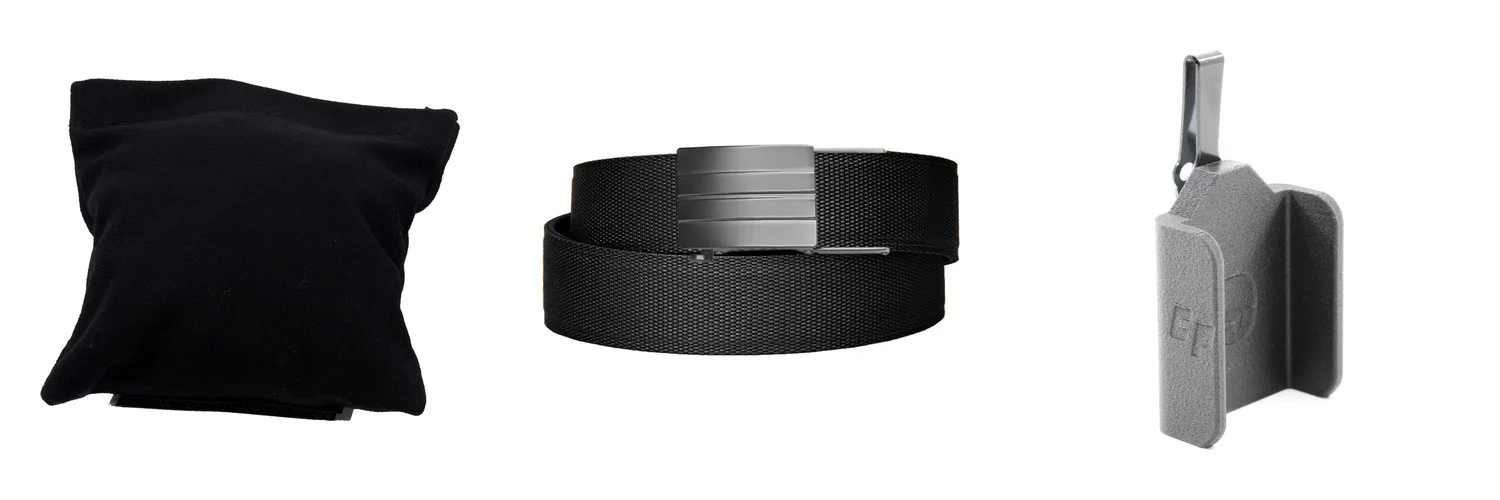
A license is the start; carrying every day is easier with a belt that holds the holster steady and a holster that doesn’t dig in. The Cloudster Pillow holster wedge mounts to the back of any IWB or AIWB holster with hook-and-loop and has shredded cooling gel memory foam fill you can add or remove to set its thickness, and our Kore 1.5″ ratchet gun belts keep the holster from sagging. For other states, see our concealed carry laws guide.
Pennsylvania License to Carry: Questions People Ask
How do I get a concealed carry permit in Pennsylvania?
Apply to the sheriff of the county where you live, or to the Philadelphia Police Department if you live in Philadelphia. You must be 21 or older; the issuing agency runs a background check through the Pennsylvania Instant Check System and has 45 days to decide.
How much does a Pennsylvania License to Carry cost?
Fees are set and collected by each county. Chester County and Dauphin County both list $20 (read November 4, 2026), and Chester adds a $1.50 card service fee.
How long is a Pennsylvania License to Carry valid?
Five years unless revoked, according to the Pennsylvania State Police.
Can a nonresident get a Pennsylvania License to Carry?
Pennsylvania may issue one to out-of-state residents who hold a valid concealed carry permit or license from their home state, but some county sheriffs will not issue nonresident licenses.
Do you need a license to carry in your car in Pennsylvania?
Yes. PSP say carrying a firearm in a vehicle without a valid license, except in your home or fixed place of business, is a crime: a third-degree felony, or a first-degree misdemeanor if the person committed no other criminal violation.
Sources, all read November 4, 2026: Pennsylvania State Police, “Carrying Firearms in Pennsylvania”; Chester County Sheriff, License to Carry Firearms; Dauphin County Sheriff, License to Carry a Firearm; Philadelphia Police Department Gun Permit Unit. Laws and county procedures change, so confirm with your sheriff before you apply. This is general information, not legal advice.