
EDC Gear
The Best Concealed Carry Jacket for Every Season
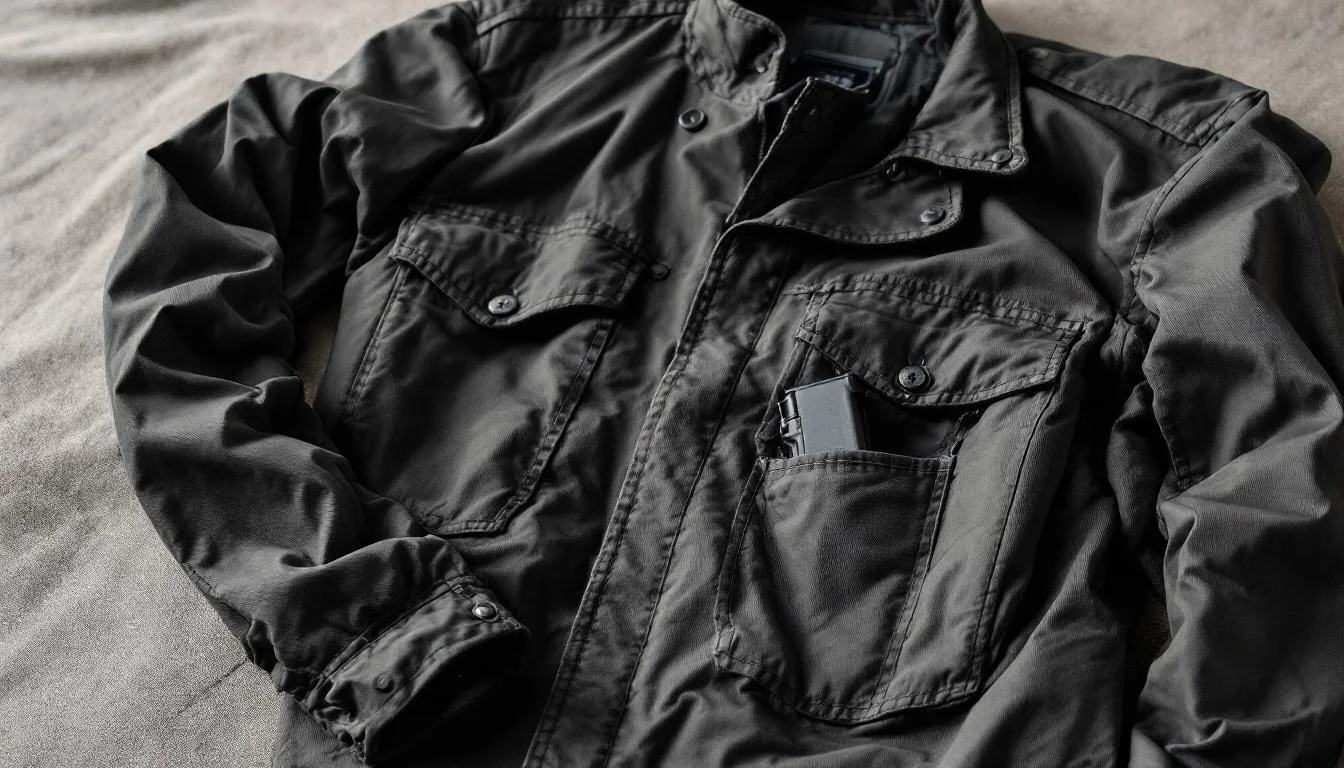
Finding the right concealed carry jacket can make or break your daily carry experience. Weather changes throughout the year demand different approaches to concealment and comfort.
We at Cloudster Pillow understand that your jacket choice affects everything from draw speed to all-day wearability. The wrong jacket leaves you printing, overheating, or struggling with access when it matters most.
What Makes a Concealed Carry Jacket Actually Work
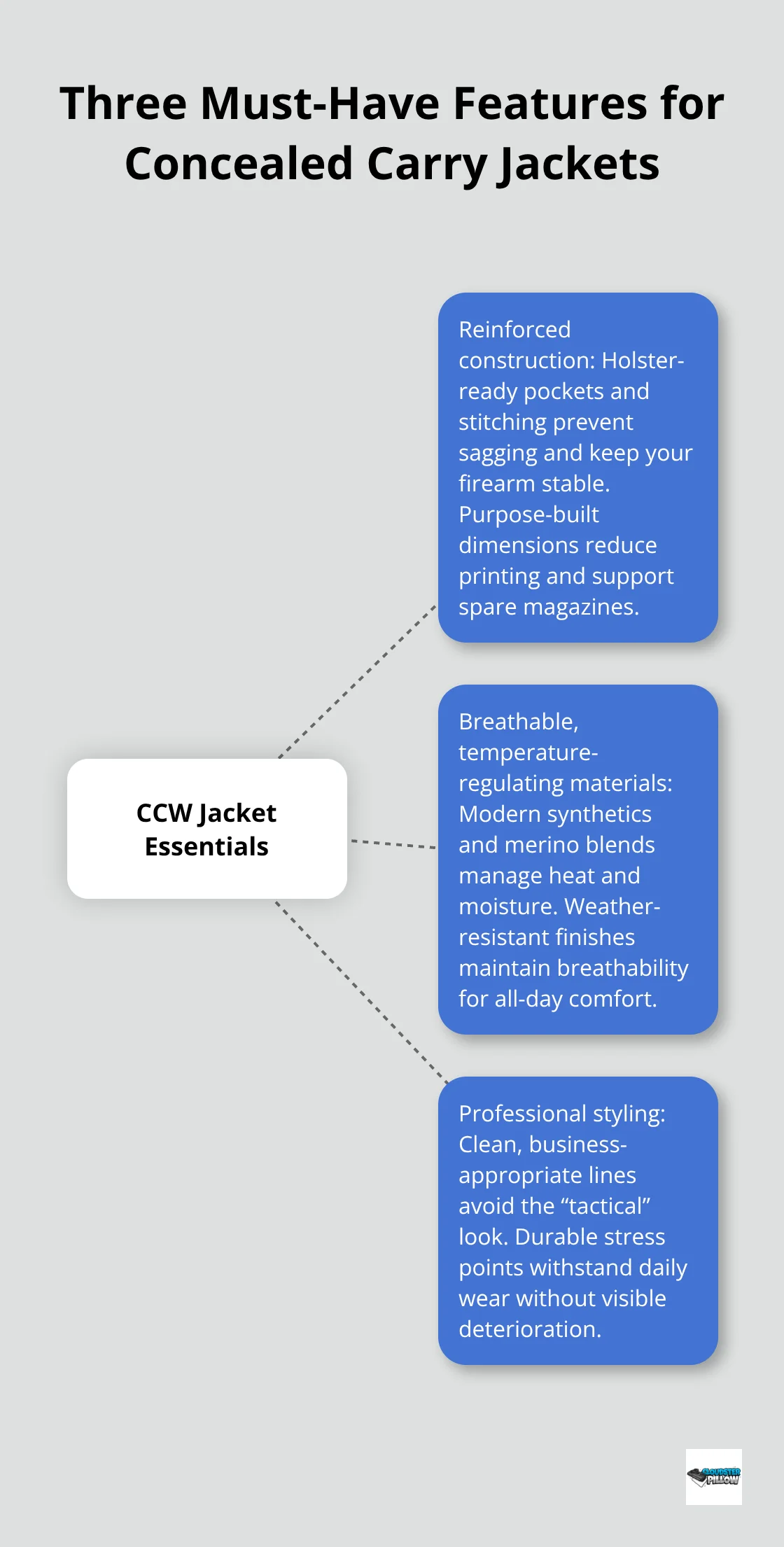
The difference between a regular jacket and a proper concealed carry jacket comes down to three non-negotiable features that separate amateur gear from professional-grade equipment.
Reinforced Construction That Handles Real Weight
Quality concealed carry jackets feature reinforced holster pockets with internal attachment points that prevent sagging and maintain consistent firearm position throughout your day. These specialized pockets include reinforced stitching that handles the weight of your firearm plus spare magazines without creating visible bulges or compromising fabric integrity.
Quality manufacturers like Vertx engineer these pockets with specific dimensions for popular carry firearms. Cheaper alternatives use generic sizing that creates printing issues and compromises your concealment profile.
Material Technology That Prevents Overheating
Breathable fabric technology prevents the overheating that plagues many concealed carriers. Advanced moisture-wicking synthetics and merino wool blends regulate temperature without sacrificing durability or professional appearance.
Weather-resistant treatments like DWR coatings repel moisture while maintaining breathability ratings above 10,000 g/m²/24hrs. Cotton-heavy blends retain moisture and create discomfort during extended wear periods (avoid these materials entirely).
Professional Styling Without Tactical Appearance
The best concealed carry jackets maintain business-appropriate styling while accommodating defensive equipment. Strategic cut patterns eliminate the boxy appearance common in tactical clothing, while reinforced stress points handle daily wear without visible deterioration.
Color selection matters more than most carriers realize. Navy, charcoal, and earth tones blend seamlessly in professional environments while black often appears too tactical for business settings (especially in corporate environments).
These foundational features become even more important when you consider how seasonal weather changes affect your carry setup and comfort requirements.
What Winter Jackets Actually Work for CCW
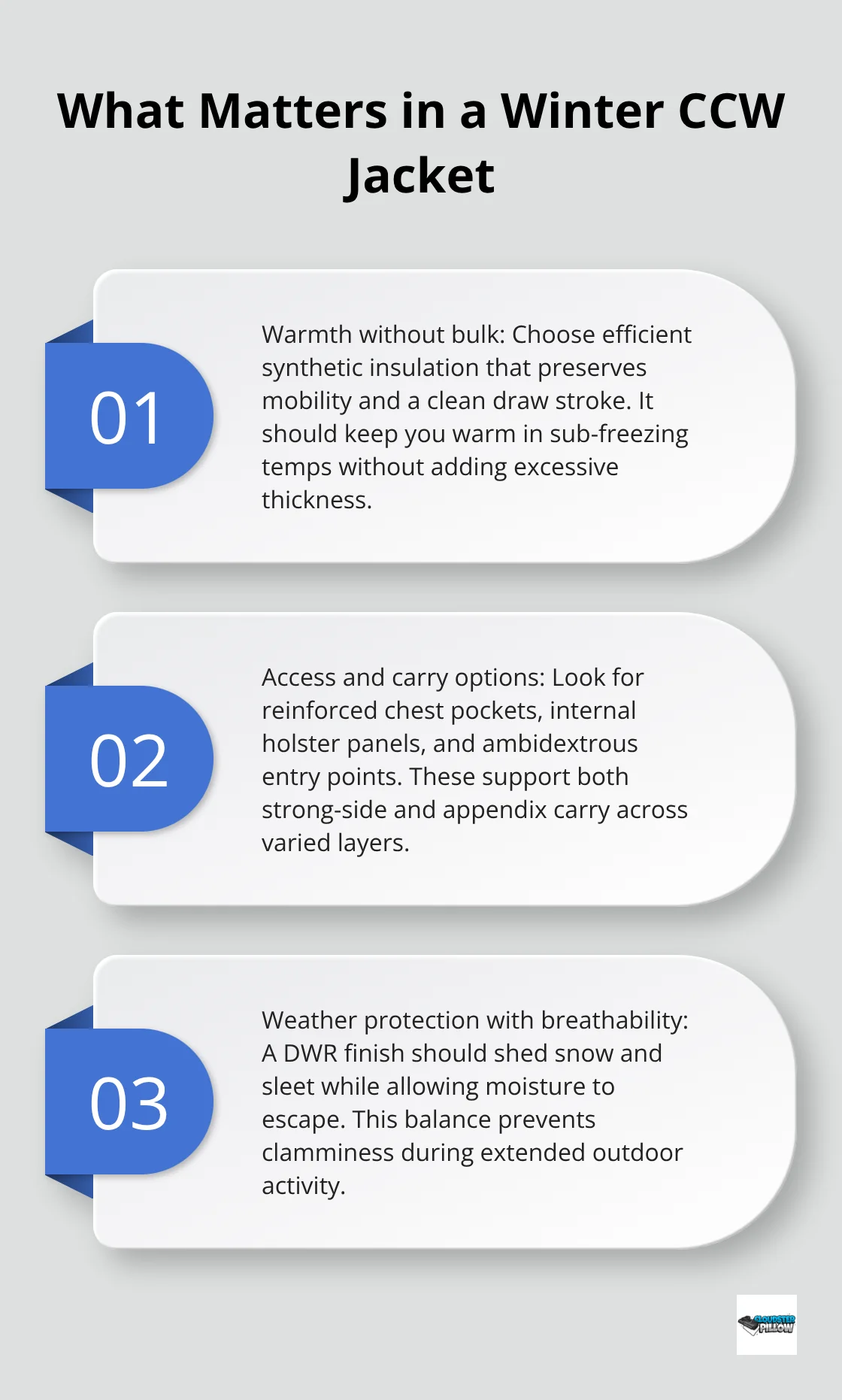
Winter concealed carry demands jackets that handle sub-freezing temperatures while you maintain quick firearm access. The Vertx Integrity+ Insulated Jacket 2.0 leads winter options with 60-gram synthetic insulation that provides warmth without bulk, priced at $305.99 with consistent 4.5-star ratings from users. Multiple carry positions include reinforced chest pockets, internal holster panels, and ambidextrous access points that accommodate both strong-side and appendix carry setups. Weather-resistant DWR coatings handle snow and sleet while they maintain breathability ratings that prevent moisture buildup during extended outdoor activities.
Insulation Technology That Works With Holsters
Synthetic insulation outperforms down fill for concealed carry applications because it maintains loft when you compress it against holster hardware. Primaloft and similar synthetic fills provide consistent warmth even when wet, while down loses all properties when moisture hits it. Target insulation weights between 40-80 grams per square meter – heavier fills create bulk that interferes with draw stroke mechanics and printing control (lighter weights fail in true winter conditions).
Layer Integration Without Compromise
Winter carry systems require jacket compatibility with your existing holster setup rather than force complete gear changes. Quality winter jackets feature adjustable internal panels that work with IWB holsters worn over base layers, while external attachment points accommodate OWB setups when heavy clothes demand outside-the-waistband carry. Sleeve cut patterns allow full range of motion for defensive positions, with underarm gussets that prevent fabric restriction during draw sequences.
Temperature Range Performance
Effective winter jackets perform across temperature ranges from 20°F to 50°F without you needing multiple garments. Ventilation systems like pit zips allow temperature regulation when you move between heated indoor spaces and cold outdoor environments. Fixed insulation levels force you to choose between overheating indoors or freezing outdoors (neither option works for daily carry).
Spring and fall weather presents different challenges that require lighter-weight solutions with enhanced versatility for changing conditions throughout the day.
Which Jackets Work for Spring and Fall Weather
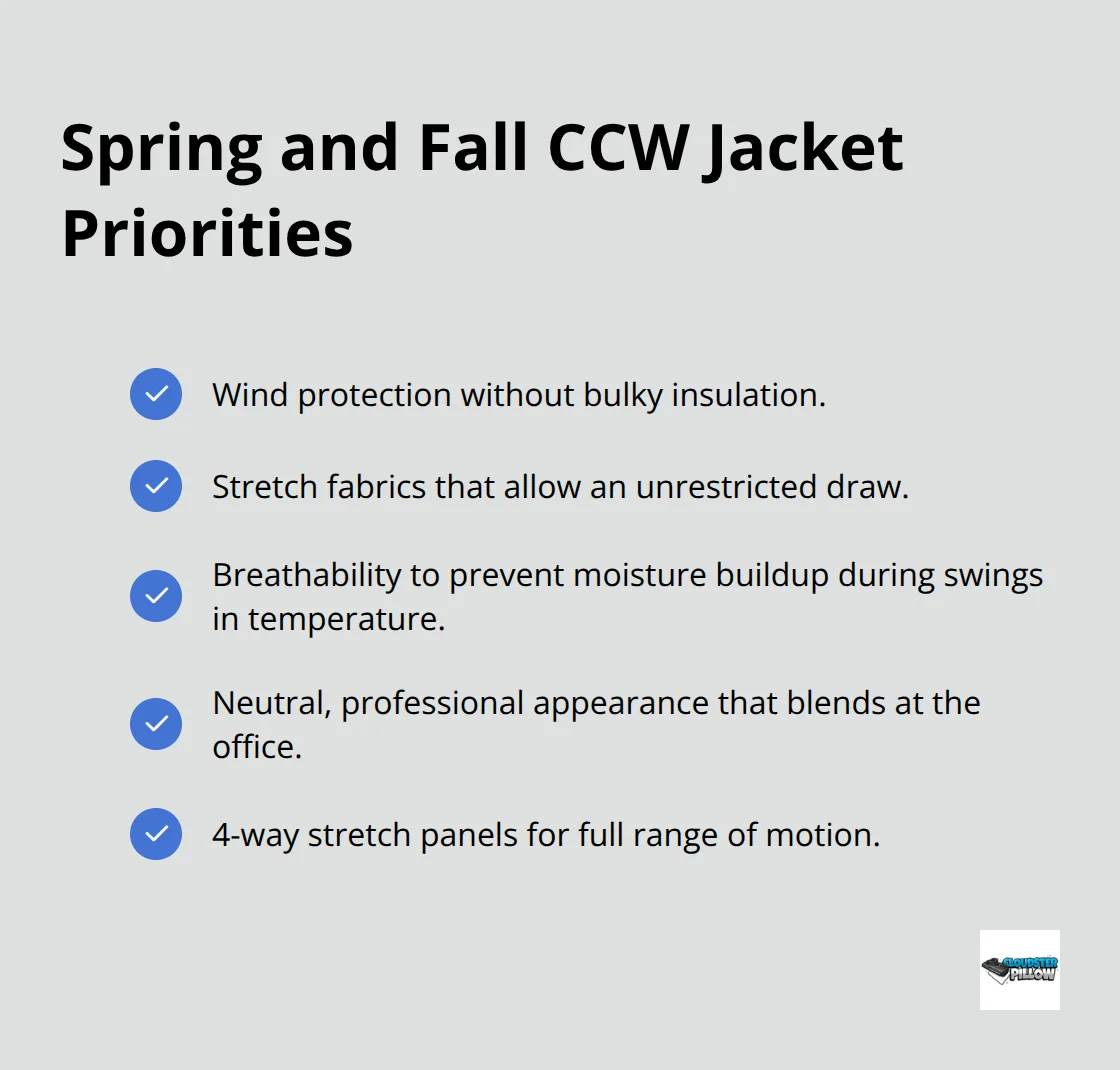
Softshell jackets dominate spring and fall concealed carry because they provide wind protection without the bulk that interferes with firearm access. The Vertx Urban Discipline Jacket exemplifies this category with stretch-woven fabric that moves with your body during draw sequences, while 4-way stretch panels eliminate the restriction common in traditional outerwear. Softshell construction provides effective wind protection, yet maintains breathability that prevents moisture buildup during temperature swings.
Professional Appearance Without Tactical Tells
Spring transition jackets must function in boardrooms and casual settings without broadcasting your carry status. Streamlined cuts eliminate the boxy silhouette that screams tactical gear, while neutral colors like charcoal and navy integrate seamlessly with business attire. Internal pocket systems remain completely hidden when empty, unlike external MOLLE attachments that create obvious tactical signatures. Quality manufacturers engineer these jackets with standard jacket proportions that pass visual inspection in corporate environments where tactical appearance creates unwanted attention or policy violations.
Weather Adaptability Features
Weather changes demand jackets with active ventilation systems that respond to temperature fluctuations throughout the day. Underarm zippers provide instant relief when you move from air-conditioned offices to warm outdoor temperatures, while adjustable cuffs and hem drawcords seal out wind during unexpected weather changes. Water-resistant treatments handle light rain without compromising breathability, though they avoid full waterproofing that traps moisture and creates discomfort during extended wear.
Temperature Range Performance
Effective transition jackets perform across wide temperature ranges without requiring multiple garments. Variable insulation systems allow temperature regulation when conditions change multiple times within single days (unlike winter or summer when temperatures remain relatively stable). Fixed insulation levels force you to choose between overheating indoors or insufficient warmth outdoors – neither option works for daily carry situations where comfort affects your willingness to carry consistently.
Final Thoughts
Your concealed carry jacket choice directly impacts your daily carry success across all seasons. Winter demands insulated options with reinforced carry systems, while spring and fall require versatile softshells that adapt to temperature changes. Summer calls for lightweight materials that maintain concealment without overheating.
Comfort and accessibility remain the deciding factors in jacket selection. The best concealed carry jacket means nothing if you avoid it due to discomfort or struggle with firearm access when needed. Professional appearance matters equally – tactical styling creates unwanted attention in business environments (especially corporate settings).
Even the perfect jacket can’t solve holster comfort issues that affect your willingness to carry consistently. Hot spots, pressure points, and problems persist regardless of outerwear quality. We at Cloudster Pillow designed our holster wedge specifically to address these comfort challenges for AIWB and IWB carriers. Better holster comfort means more consistent carry habits, which translates to improved personal protection readiness throughout every season.
