Holsters and Gear Recommendations
Concealment Vest: How Concealed Carry Vests Work
Quick answer: A concealment vest hides a handgun in one of two ways: worn open over a belt holster as a cover garment, or with holster pockets sewn inside so the gun rides in the vest. Purpose-built vests add magazine pockets. Shooters also wear them in IDPA matches, where gear must stay hidden under a concealment garment.
Two Kinds of Concealment Vest
| Vest as a cover garment | Vest with built-in holster pockets | |
|---|---|---|
| Where the gun rides | In a holster on your belt; the vest hangs over it | In a holster pocket inside the vest |
| What vest | Almost any vest long enough to cover the holster | A purpose-built carry vest |
| When you take it off | The gun stays on your belt | The gun comes off with the vest |
Vests With Built-In Holster Pockets
Purpose-built vests put the holster inside. Tractor Supply’s listing for the Wyoming Traders Women’s Calamity vest says it “has two pistol holsters and four magazine holders with removable imprint pad,” with “Hidden inside holsters with adjustable closure.”
Some vests use inserts instead. The Armory Life reviewed the Travel Safe Concealment Vest from ConcealedCarry.com and found “The inside of each pocket has a large Velcro patch sewn in,” with holster inserts “that also have Velcro and can secure in place.” The reviewer warned that a bare pocket isn’t a holster: “While the internal pockets are large enough to fit even a full-sized 1911 such as my Springfield TRP, the firearm wouldn’t be secure.”
What Carriers Say
Comments on The Armory Life’s forum show the trade-offs:
- The look: “Yeah, these scream “I have a gun!”, and loudly.”
- Weight: “My only issue is the weight is on one side. It works best when worn under a jacket or coat, not by itself.”
- Over a holster: “Not big on putting my guns into pockets but I like the full vests for using shoulder rigs instead of a full jacket in mild weather.”
For carrying under a vest, see our guides to shoulder holsters and concealment clothing.
Vests in IDPA Matches
IDPA’s rulebook (2026.2) requires that “All equipment will be placed so that it is not visible while wearing a concealment garment, with your arms extended to your sides, parallel to the ground.” A stage description may give “the option of not wearing a concealment garment.”
Shooters on The Firing Line forum note it doesn’t have to be a tactical vest: “It doesn’t have to be a “vest.” Just a cover garment.” Another wrote that “generally the only concern is length, if I’m wearing OWB gear.” Our competition pistol holster guide covers IDPA’s holster and belt rules.
Under the Vest: The Holster and Belt
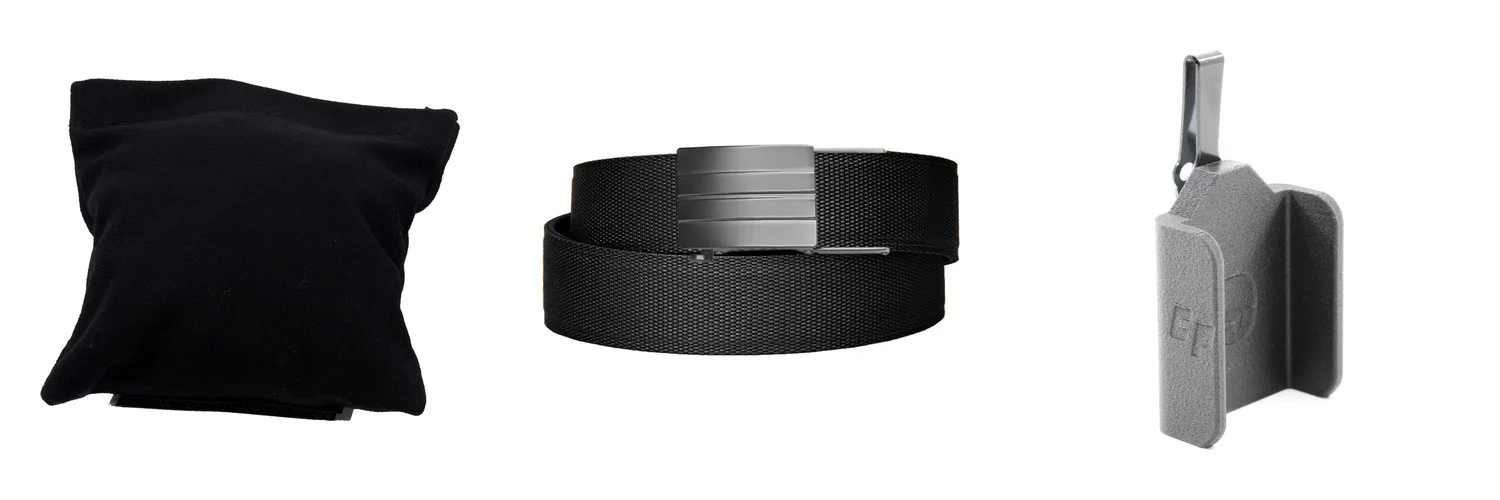
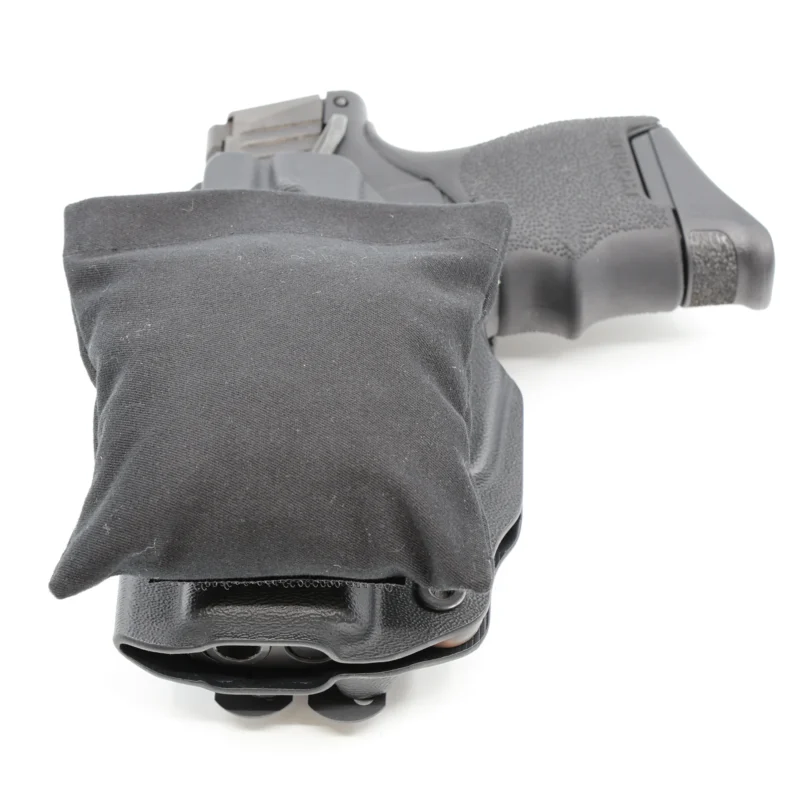
We don’t make or sell vests or other clothing. A vest worn as a cover garment still relies on the holster and belt underneath. For an IWB holster, the Cloudster Pillow holster wedge mounts to any flat-back IWB or AIWB holster with hook-and-loop, angles the grip into your body, and has memory-foam fill you can add or remove to set its thickness. The Kore gun belts we carry are 1.5″ wide.
For other cover garments, see our guides to concealed carry jackets and concealed carry hoodies. For what goes under them, see our concealed carry pants guide.
Concealment Vest: Questions People Ask
Do I need a special vest to conceal carry?
No. Any vest long enough to cover your holster works as a cover garment; purpose-built vests add holster and magazine pockets.
Can I carry a gun in a vest pocket?
The Armory Life’s reviewer found a full-size 1911 fit an internal pocket but “wouldn’t be secure,” and wrote: “I highly recommend that you also get the appropriate pocket insert for the firearm you carry.”
Is a vest allowed in IDPA?
Yes. IDPA requires your gear to stay hidden under a concealment garment, and shooters on The Firing Line forum list vests among the garments they use.
Does Cloudster Pillow sell concealment vests?
No. We make the Cloudster Pillow holster wedge and magnetic mag carriers, and carry Kore belts.
Written by the Cloudster Pillow team. We make the Cloudster Pillow and the Cloudster magnetic mag carriers, and carry Kore belts. We don’t sell clothing, holsters or firearms, and no maker paid to be mentioned here. This is general information, not legal advice or a substitute for professional training; check the carry laws where you live.