Holsters and Gear Recommendations
Paddle Holster Guide: How Paddle Holsters Work and When to Use One
Quick answer: A paddle holster is an outside-the-waistband holster held on by a wide, flat paddle that slides inside your waistband behind your belt, instead of belt loops. It goes on and off without removing your belt. The trade-offs: it usually rides a little farther from the body and prints more, and a weak paddle can lift out on the draw.
What Is a Paddle Holster?
Holster maker Alien Gear defines it as “a type of outside-the-waistband (OWB) holster that secures to your body using a wide, flat paddle attachment that slips inside your waistband—resting behind your belt or pants.” Galco explains the name: “there is a paddle-shaped concave piece between the rest of the holster and the wearer’s body.”
The difference from a belt-slide or belt-loop holster is how it attaches. Alien Gear notes that “Unlike a belt slide holster, which requires threading the holster through your belt loops, a paddle holster stays in place using friction and the paddle’s contour against your body.” For other ways to mount a holster, see our drop leg and MOLLE holster guides.
How Does a Paddle Holster Stay On?
Three things hold it: the paddle’s shape against your hip, the pressure of your waistband and belt, and, on better designs, a hook. Alien Gear says some paddles “include a retention hook or lip that grabs the bottom edge of your belt,” and calls that crucial because “It prevents the holster from pulling free when you draw your firearm with upward force.” Paddles are made for a range of belt widths; Blade-Tech says its adjustable paddle “can accommodate belts from 1.25 to 2 inches.”
Paddle vs Belt-Loop OWB Holster
| Paddle holster | Belt-loop (belt slide) holster | |
|---|---|---|
| On and off | Without removing your belt | Threaded onto the belt |
| Holds by | Friction, contour and (on good ones) a belt hook | The belt running through loops or slots |
| Close to the body | “tend to ride slightly farther off the body” (Alien Gear) | Alien Gear says belt-mounted rigs “typically hug closer to the waist” |
| Concealment | Possible under a cover garment; prints more | Better suited to concealment |
| Best for | Taking the gun off during the day, range sessions, part-time carry | Alien Gear: “more suitable for concealment-focused users” |
Galco also sells hybrids, such as its Wraith 2, with “interchangeable belt slot and paddle attachments.”
Can You Conceal Carry With a Paddle Holster?
You can, with limits. Alien Gear says paddle holsters “tend to ride slightly farther off the body than belt slide OWB holsters, which can lead to printing.” It adds that at the 3 or 4 o’clock position, with a cover garment “such as a flannel, sweatshirt, or untucked overshirt,” many users conceal successfully, especially with slim guns, and that adjustable cant and ride height help.
For light or fitted shirts, Alien Gear’s own advice is that “you’ll likely be better served with a dedicated IWB system.” Our IWB vs OWB comparison and OWB holster guide cover both sides.
When Does a Paddle Holster Make Sense?
- Taking the gun off during the day. Alien Gear lists moving between restricted areas, “(e.g., courthouses, post offices),” where the holster can come off without removing your belt.
- Training and competition. Alien Gear says the quick on/off design “doesn’t require rethreading through belt loops between iterations.”
- Open carry on rural or private property, which Alien Gear lists among common uses. For public open carry, see our open carry holster guide.
- Part-time carry, which Alien Gear describes as a fit “For individuals who don’t carry for 12-hour shifts.”
What to Look For in a Paddle Holster
- A belt hook or lip. Alien Gear warns that “Smooth plastic paddles with little to no texturing or belt catch” increase the risk of dislodging during fast draws, and that “a weak paddle can lift right out of the waistband, especially if no belt catch is present.”
- A solid paddle connection. Alien Gear flags “Plastic rivets or spot-welded paddle connections, which can crack under stress or detach with sudden torsion.”
- Cant and ride height you can set. Galco offers “a neutral cant or a butt-forward cant — whichever makes it easier for you to draw and holster your firearm.”
- A fit to your belt width. Check the maker’s stated range, like Blade-Tech’s “1.25 to 2 inches.”
- Practice the draw with an unloaded gun and make sure the holster stays on the belt when you pull up hard.
The Belt Matters, Even for a Paddle
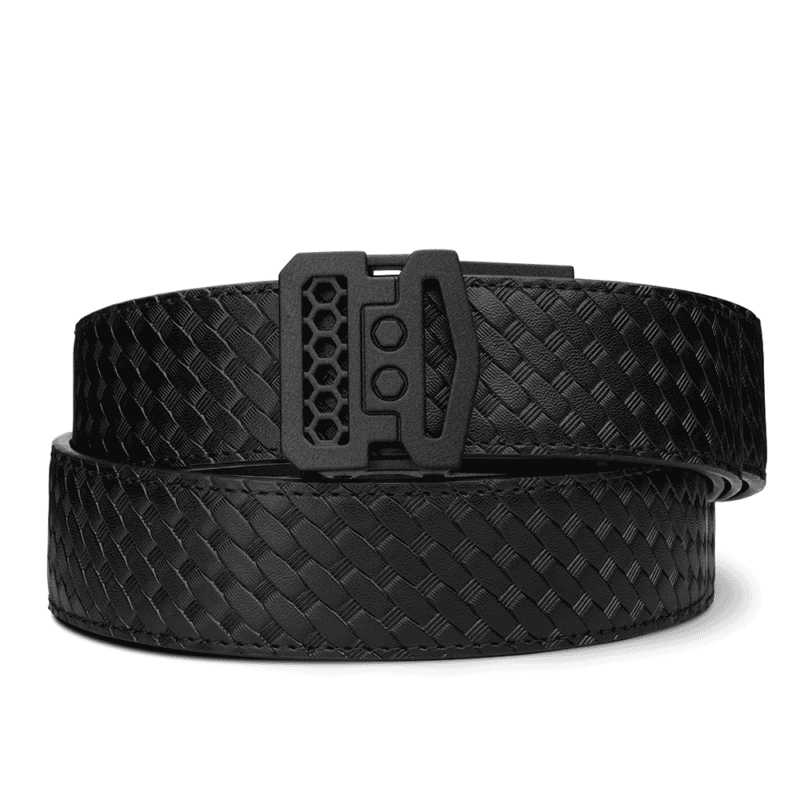
A paddle’s hook catches the bottom edge of the belt (Alien Gear), so the belt is part of how the holster stays on. The Kore gun belts we carry are 1.5″ wide, which sits inside Blade-Tech’s stated 1.25″ to 2″ paddle range, and Kore lists a “Power-Core™ Center for Added Stiffness and Support” and an adjustable track with “40+ positions in ¼” increments,” so you can snug the belt once the holster is on.
Paddle Holster: Questions People Ask
Are paddle holsters secure?
Good ones are. Look for a belt hook or lip that catches the underside of the belt; Alien Gear says it’s what keeps the holster from pulling free on the draw.
Do paddle holsters print more?
Usually a little, because they ride farther from the body than belt-loop holsters. A cover garment and some forward cant help.
Do you need a belt for a paddle holster?
The paddle sits inside the waistband behind the belt, and belt hooks grab the belt’s bottom edge, so the belt is part of how it stays on.
Paddle or IWB for daily carry?
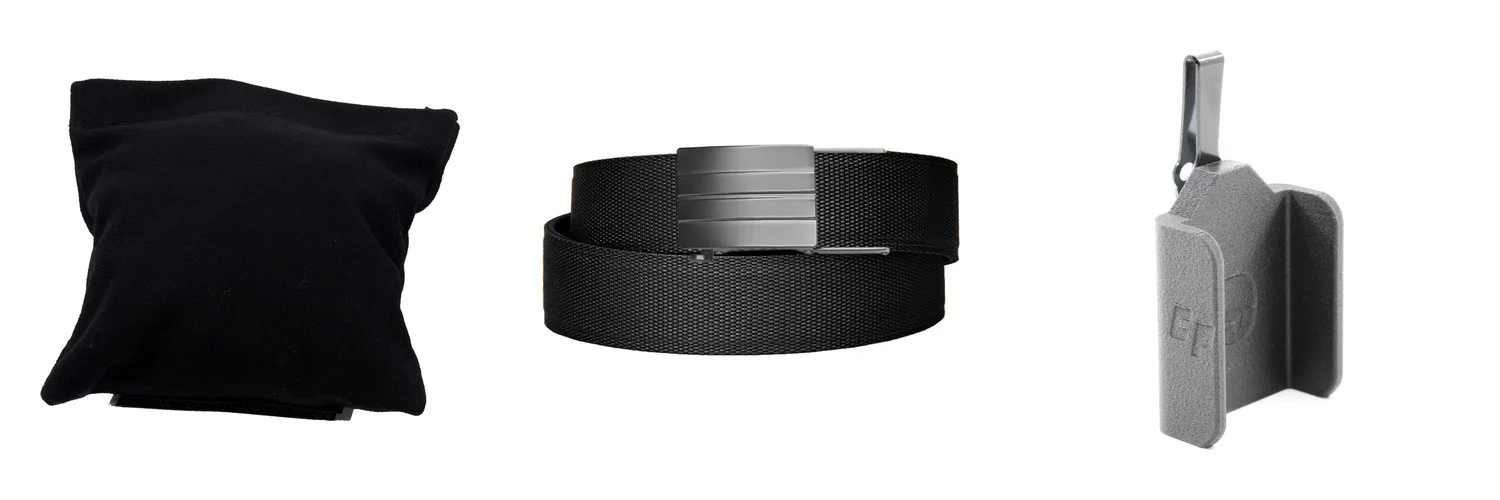
For concealment under light clothing, IWB. A paddle suits days when the gun comes off and on, or when a cover garment is part of the outfit. If an IWB holster digs in, a soft Cloudster Pillow holster wedge attaches to the back of it and angles the grip into the body for concealment and comfort.
Written by the Cloudster Pillow team. We make the Cloudster Pillow and carry Kore gun belts. We don’t sell holsters or firearms, and no maker paid to be mentioned here. This is general information, not a substitute for professional training; check the carry laws where you live.