CCW Courses and Tips
Concealed Carry Reciprocity 2026: How to Check Before You Travel

Quick answer: There is no national concealed carry reciprocity in 2026. Whether you can carry in another state depends on that state’s own law. Some states honor every other state’s permit, some honor only a list, and some add conditions such as age 21 or residency in the state that issued your permit. Reciprocity is often one-way, so check the destination state’s official page before every trip.
Reciprocity, recognition and permitless carry: what the words mean
Pennsylvania’s Attorney General uses three terms that help with every state:
- Reciprocity agreement: a written agreement signed by both states that sets out what each state honors.
- Statutory reciprocity: both states’ laws recognize the other’s licenses, with no written agreement needed.
- Unilateral recognition: a state honors your license whether or not your home state honors its licenses in return.
A fourth idea matters too: permitless carry for visitors. Some states let a visitor carry without any permit if the visitor meets the state’s rules. Florida is one example (see the table). There are 29 permitless carry states; see our constitutional carry states 2026 list for names and dates. Permitless carry at home doesn’t carry over when you cross a state line. The law of the state you’re in applies.
There is still no national reciprocity
The bill that would create it, H.R. 38, the Constitutional Concealed Carry Reciprocity Act of 2025, was approved 18-9 by the House Judiciary Committee on March 25, 2025. Its latest action, on October 3, 2025, was placement on the House Union Calendar, No. 289. Congress.gov still lists its status as “Introduced” (checked October 3, 2026). It has not had a House floor vote. For the federal rules that apply everywhere, see our concealed carry laws 2026 guide.
Six state examples, checked October 2026
These are examples, not a full 50-state map. Each row comes from that state’s own official page, read on October 3, 2026. Rules change, so open the link before you go.
| State | Whose permits it honors | Key conditions | Official source |
|---|---|---|---|
| Colorado | Permits from 34 listed states that honor Colorado’s permit | You must live in the state that issued your permit, carry a matching driver’s license or state ID, and be 21 or older. Non-resident permits aren’t recognized. Colorado residents need a Colorado permit. | Colorado Bureau of Investigation |
| Florida | A valid license from the state where you live | A non-resident 21 or older may carry if they meet Florida’s own license criteria, or hold a valid license from their home state. Service members and honorably discharged veterans may carry at 18. | Florida Dept. of Agriculture and Consumer Services |
| North Carolina | Every other state | Carry your permit and ID. Tell an officer you have a permit and are carrying when approached, and show both if asked. | NC Department of Justice; G.S. 14-415.24 |
| Pennsylvania | States with a written agreement or mutual statutory reciprocity (state-by-state map) | Only residents of the issuing state who are 21 or older. Status can differ by license type. Pennsylvania residents need a Pennsylvania license. | Pennsylvania Attorney General |
| Virginia | All 50 states, D.C. and the U.S. territories, if the conditions are met | Be 21 or older, carry a government photo ID, show the permit and ID when an officer asks, and never have had a Virginia permit revoked. A law change takes effect July 1, 2027 (see below). | Virginia State Police; Va. Code 18.2-308.014 |
| Wisconsin | A published list of states and D.C. | Non-residents 21 or older. Not honored: Guam, Maine, New Jersey, Oregon, Virgin Islands. Florida and Virginia: non-resident licenses only. Wisconsin residents need a Wisconsin license. | Wisconsin Department of Justice |
Virginia’s 2027 change: a 2026 law rewrites Virginia’s reciprocity section effective July 1, 2027. From then on, an out-of-state permit counts only if the issuing state’s requirements are “substantially similar” to Virginia’s. The Attorney General decides which states qualify, and State Police publish the list. Virginia residents won’t be able to carry on another state’s permit, with an exception for active-duty service members and their spouses.
Why reciprocity is often a one-way street
The official pages above show how lopsided it can be:
- North Carolina honors permits from every state. But when NC’s Department of Justice asked other states whether they honor NC permits, 17 said yes in the past year. NC notes that states that respond late or don’t respond aren’t listed.
- Florida lists Wisconsin as a reciprocity state. Wisconsin’s page says it honors only Florida non-resident licenses, not Florida resident licenses.
- Virginia State Police say that although Virginia recognizes all states’ permits, “those states may not authorize Virginia permit holders” to carry there.
The takeaway: your home state’s list tells you who it honors. Only the destination state’s own page tells you whether it honors you.
Driving through a state that doesn’t honor your permit
Federal law, 18 U.S.C. 926A, lets a person who can legally have a firearm transport it from a place where they may lawfully have and carry it to another such place. During the trip:
- The firearm must be unloaded.
- Neither the firearm nor any ammunition can be readily or directly accessible from the passenger compartment.
- In a vehicle with no trunk, the firearm or ammunition must be in a locked container other than the glove compartment or console.
This protects transporting a gun, not carrying it loaded on your person.
Carry your permit and ID
Several of the states above tie recognition to documents. Virginia requires a government photo ID and showing your permit and ID when an officer asks. North Carolina requires you to carry both and to tell an officer you’re carrying. Colorado requires a driver’s license or state ID from the same state as your permit.
Banned places change at the state line
Being allowed to carry in a state doesn’t mean you can carry everywhere in it. North Carolina’s Department of Justice, for example, lists places where concealed handguns may not be carried, including:
- Law enforcement and correctional facilities.
- Any space occupied by state or federal employees, including courthouses.
- Schools and school grounds.
- Businesses that post a sign banning concealed weapons.
- While consuming alcohol or under the influence of alcohol or controlled substances (with an exception for legally obtained medication taken as directed).
Wisconsin says out-of-state licensees must follow Wisconsin’s carry laws. Federal no-carry places, such as post offices and federal buildings, apply in every state; see our 2026 carry laws guide.
How to check before a trip
- List every state you’ll be in, including ones you only drive through.
- For each state, open its official reciprocity page (state police, attorney general or the agency that issues permits) and read its statute.
- Check the conditions, not just the list: minimum age, residency, license type, and whether the state honors non-resident permits.
- Check what happens to its own residents. Colorado, Pennsylvania and Wisconsin require their residents to hold an in-state license.
- Look up that state’s banned places and whether you must tell an officer you’re carrying.
- For states that don’t honor you, plan to transport under 18 U.S.C. 926A: unloaded and out of reach.
- Note the date you checked, and check again before your next trip.
Was national concealed carry reciprocity passed? (Status as of November 3, 2026)
No. As of November 3, 2026, H.R. 38, the House bill that would create national concealed carry reciprocity, has not passed the House or the Senate and has not become law.
The House bill is H.R. 38, the Constitutional Concealed Carry Reciprocity Act of 2025, sponsored by Representative Richard Hudson of North Carolina. It was introduced on January 3, 2025, and the House Judiciary Committee ordered it reported by an 18 to 9 vote on March 25, 2025. The committee filed its report, H. Rept. 119-337, on October 3, 2025, and the bill was placed on the House Union Calendar as Calendar No. 289. The Union Calendar placement is still the last recorded action. The bill has not passed the House, has not passed the Senate and has not become law.
The Senate companion is S. 65, introduced by Senator Cornyn on January 9, 2025, with 44 cosponsors named in the introduced text. It was read twice and referred to the Senate Committee on the Judiciary.
Because this status can change on any day Congress is in session, the date at the top of this section is the date we last checked the bill records. Check congress.gov for H.R. 38 or S. 65 before you rely on this answer.
What H.R. 38 would and would not change
The text below comes from the version of H.R. 38 reported by the House Judiciary Committee. It describes what the bill would do if it became law in that form. It is not law today.
Who would be covered. A person who is not prohibited by federal law from possessing a firearm, who carries a valid photo identification document, and who either holds a valid license or permit to carry a concealed firearm or “is entitled to carry a concealed firearm in the State in which the person resides” could carry a concealed handgun in any state that allows its own residents to carry concealed. That second group would include residents of permitless carry states, who hold no permit.
What states could still restrict. The bill would not override state laws that let private persons or entities prohibit or restrict concealed firearms on their property, or state laws that prohibit or restrict firearms on state or local government property, installations, buildings and bases.
Federal land. A person carrying under the bill could also carry in units of the National Park System, the National Wildlife Refuge System, and public land under the Bureau of Land Management that are open to the public, among other listed federal areas.
School zones. A person carrying under the bill would not be subject to the prohibitions of 18 U.S.C. 922(q), the federal Gun-Free School Zones Act.
When it would start. The bill’s amendments would take effect 90 days after the date of enactment.
Florida concealed carry reciprocity: which states honor a Florida license (checked November 3, 2026)
The Florida Department of Agriculture and Consumer Services (FDACS) issues the Florida concealed weapon license and publishes the official reciprocity list. FDACS describes reciprocity as a mutual recognition agreement between two states to recognize a concealed weapon license issued by the other state.
For Florida’s own rules (permitless carry, the license requirements, fees and renewal), see our Florida concealed carry guide.
As shown on the FDACS page on November 3, 2026, the states with reciprocity are:
Alabama, Alaska, Arizona, Arkansas, Colorado, Delaware, Georgia, Idaho, Indiana, Iowa, Kansas, Kentucky, Louisiana, Maine, Michigan, Mississippi, Missouri, Montana, Nebraska, Nevada, New Hampshire, New Mexico, North Carolina, North Dakota, Ohio, Oklahoma, Pennsylvania, South Carolina, South Dakota, Tennessee, Texas, Utah, Vermont, Virginia, West Virginia, Wisconsin and Wyoming.
FDACS tells license holders that when they travel with firearms it is their responsibility to know and comply with the laws of the state they plan to visit. The list above is a snapshot. Before each trip, open the FDACS reciprocity page and the destination state’s own page, because either side can change the arrangement.
Visiting Florida with an out-of-state license, and Florida permitless carry when you travel
Visitors to Florida. Under section 790.015 of the 2026 Florida Statutes, a nonresident may carry a concealed weapon or concealed firearm in Florida if the nonresident is a resident of the United States who is 21 years of age or older and has in his or her immediate possession a valid license to carry a concealed weapon or concealed firearm issued to the nonresident in his or her state of residence. The age requirement does not apply to a servicemember or to a veteran of the United States Armed Forces who was discharged under honorable conditions. A nonresident is subject to the same laws and restrictions on carrying a concealed weapon or firearm as a Florida resident.
If you move to Florida. If a nonresident with a valid license from another state establishes legal residence in Florida by registering to vote, making a statement of domicile or filing for homestead exemption, that license is recognized as valid for 90 days following the date the holder establishes legal state residence.
Permitless carry in Florida. Under section 790.01 of the 2026 Florida Statutes, a person is authorized to carry a concealed weapon or concealed firearm if he or she is licensed under section 790.06, or is not licensed but otherwise satisfies the criteria for receiving and maintaining such a license. FDACS also says that a nonresident 21 or older may carry while visiting Florida if he or she either satisfies Florida’s licensing criteria or has a valid home-state license in his or her immediate possession.
Why Floridians still get the license. FDACS describes reciprocity in terms of a license issued by one state being recognized by the other. FDACS also tells travelers that it is their responsibility to know and comply with the laws of the state they plan to visit. If you plan to carry in another state, carry the Florida license itself and confirm with that state before you go.
Licenses at 18. FDACS reports that on June 17, 2026, the Fourth District Court of Appeal of Florida ruled in Eubanks v. Florida (4D2025-1698) that the age provision in section 790.06(2)(b) is unconstitutional, and that Florida now issues licenses to applicants 18 and older who meet the other eligibility criteria. Other states set their own minimum age for honoring a license. Virginia, for example, honors an out-of-state permit only if the holder is at least 21. Check each destination state before relying on a license issued to an 18 to 20 year old.
Virginia concealed carry reciprocity: who Virginia honors now (checked November 3, 2026)
The Virginia State Police reciprocity and recognition page lists all 50 states, the District of Columbia, the Commonwealth of Puerto Rico, Guam, the Northern Mariana Islands and the U.S. Virgin Islands as jurisdictions whose concealed handgun or concealed weapon permits Virginia recognizes.
The conditions in Va. Code § 18.2-308.014, as in effect until July 1, 2027, are: the holder is at least 21 years of age; the issuing authority provides the means for instantaneous verification of the validity of its permits, accessible 24 hours a day if available; the holder carries a photo identification issued by a government agency of any state or by the U.S. Department of Defense or U.S. Department of State, and displays the permit or license and the identification on demand by a law enforcement officer; and the holder has not previously had a Virginia concealed handgun permit revoked.
Recognition is one way. The State Police page warns that although Virginia law requires Virginia to recognize all states that issue permits, “those states may not authorize Virginia permit holders to possess a firearm in their state,” and it recommends that travelers contact the state they intend to travel through before carrying across state lines. Florida is one example of a state that does list Virginia on its own reciprocity page. For every other destination, open that state’s official page, because this page does not list which states honor a Virginia permit.
Virginia’s 2026 reciprocity law: what changes on July 1, 2027
The 2026 General Assembly passed Senate Bill 115, which amends Va. Code § 18.2-308.014. The amended section appears in the Code of Virginia with the history line “2026, c. 879”. The Code shows two versions of the section: the current one, and the amended one that takes effect July 1, 2027. The enrolled bill says the amended text “shall become effective on July 1, 2027”.
The new test. From July 1, 2027, an out-of-state permit will authorize carry in Virginia only if the issuing authority provides a means of instantaneous verification of the permit’s validity accessible 24 hours a day, and, except for the holder’s age and the type of weapon allowed, that state’s requirements and qualifications are “substantially similar” to Virginia’s for keeping permits away from people Virginia would deny. The Office of the Attorney General determines which states meet the test, and the Department of State Police must publish those states on its website and keep a registry of them on the Virginia Criminal Information Network for law enforcement.
The review due by December 1, 2026. The bill’s second enactment clause directs the Attorney General to review every reciprocal recognition agreement in place as of July 1, 2026, and to revoke any agreement or recognition for a state that does not meet the substantially similar test by December 1, 2026. The Attorney General must give a written explanation for each finding that a state’s laws are substantially similar. On November 3, 2026, the State Police reciprocity page still showed the all-states list and no revocation notice. Check that page after December 1, 2026.
Virginia residents and out-of-state permits. From July 1, 2027, a Virginia resident who has not been issued a valid Virginia concealed handgun permit may not use a permit or license issued by another state to carry a concealed handgun in Virginia. Active duty members of the United States Armed Forces and their spouses are exempt. Until that date, the current section lists only the conditions above and sets no residency limit.
What this means for Virginia permit holders. The State Police page warns that other states may not authorize Virginia permit holders to possess a firearm in their state.
Virginia nonresident concealed handgun permit
Non-residents 21 and older apply in writing to the Virginia State Police for a five-year nonresident permit, with a $100.00 money order or cashier’s check (Virginia State Police, read November 4, 2026). Our full Virginia concealed carry permit guide covers the nonresident and resident permits, fees, timing and renewal.
Carrying in Virginia: open carry, vehicles and alcohol
Open carry. The Virginia State Police FAQ states: “A firearm may be carried openly in Virginia except where prohibited by statute”.
Concealed carry without a permit. Under Va. Code § 18.2-308, carrying a listed weapon “hidden from common observation” is a Class 1 misdemeanor for a first offense, a Class 6 felony for a second and a Class 5 felony for a third or later offense, unless an exception applies.
Handgun in a vehicle. One exception in § 18.2-308 covers a person who may lawfully possess a firearm and is carrying a handgun in a personal, private motor vehicle or vessel while the handgun is secured in a container or compartment in the vehicle or vessel.
Leaving a handgun in a parked vehicle. A new section, Va. Code § 18.2-308.7:2, enacted by chapters 560 and 561 of the 2026 Acts of Assembly, makes it a Class 4 misdemeanor to knowingly leave a handgun in an unattended vehicle unless the handgun is placed out of plain view in a locked hard-sided container, which includes a locked container affixed to the vehicle’s interior, a locked glove compartment or a locked center console. The section defines which vehicles and locations it covers and lists exceptions, including for law enforcement officers and antique firearms. Read the section itself before leaving a handgun in a car in Virginia.
Alcohol. Under Va. Code § 18.2-308.012, a person who carries a concealed handgun onto the premises of a restaurant or club licensed to serve alcohol on site and consumes alcoholic beverages is guilty of a Class 2 misdemeanor. A person permitted to carry a concealed handgun who is under the influence of alcohol, marijuana or illegal drugs while carrying the handgun in a public place is guilty of a Class 1 misdemeanor.
Concealed carry reciprocity map (checked November 3, 2026)
As of November 3, 2026, H.R. 38, the national reciprocity bill, has not become law, so each state’s own list decides recognition. The maps below are drawn from two official state lists, and each one shows a single question.
Map 1: states that honor a Florida concealed weapon license. Shaded states are the states on the FDACS reciprocity list as read on November 3, 2026: Alabama, Alaska, Arizona, Arkansas, Colorado, Delaware, Georgia, Idaho, Indiana, Iowa, Kansas, Kentucky, Louisiana, Maine, Michigan, Mississippi, Missouri, Montana, Nebraska, Nevada, New Hampshire, New Mexico, North Carolina, North Dakota, Ohio, Oklahoma, Pennsylvania, South Carolina, South Dakota, Tennessee, Texas, Utah, Vermont, Virginia, West Virginia, Wisconsin and Wyoming. Source: the FDACS Concealed Weapon License Reciprocity page.
Map 2: permits Virginia honors. As read on November 3, 2026, Virginia recognizes permits from all 50 states, the District of Columbia, Puerto Rico, Guam, the Northern Mariana Islands and the U.S. Virgin Islands, subject to the conditions in the Virginia section above. This map changes on July 1, 2027, when only states the Attorney General finds substantially similar will qualify, and it may change sooner if the Attorney General revokes any recognition by December 1, 2026. Source: the Virginia State Police Reciprocity and Recognition page.
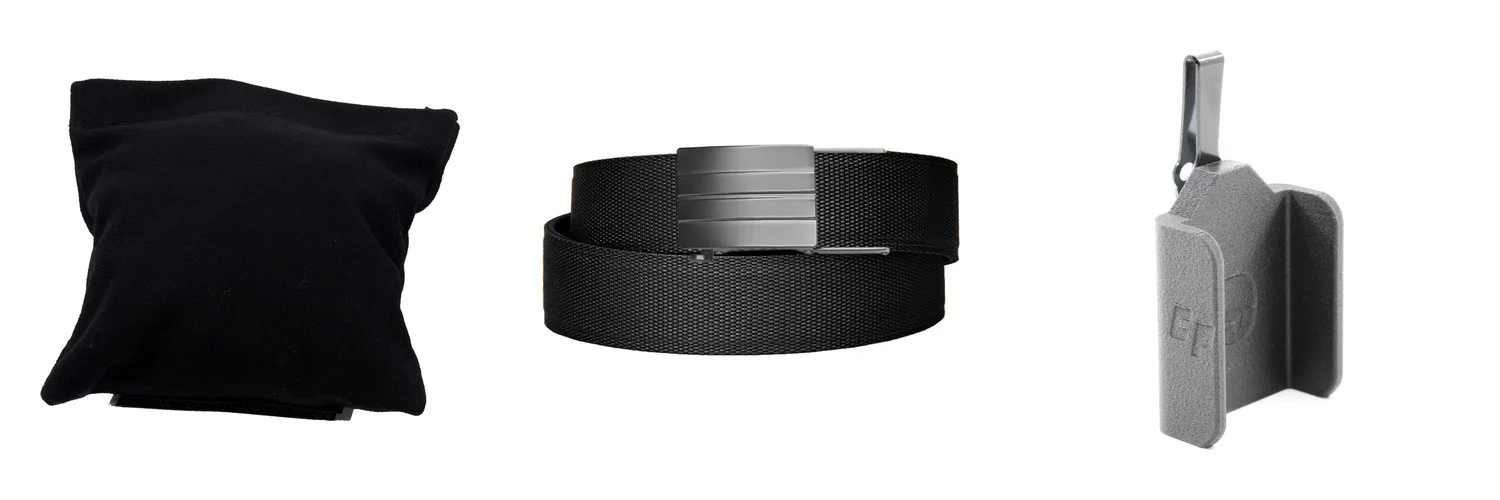
A map is a snapshot of the day it was drawn. FDACS tells travelers it is their responsibility to know and comply with the laws of the state they plan to visit, and the Virginia State Police recommend contacting the state you intend to travel through before carrying there. If you drive long distances across several states on a trip like this, the Cloudster Pillow holster wedge, a soft, adjustable cooling-gel memory foam wedge made in the USA for inside-the-waistband and appendix holsters, is the product this site makes for that kind of all-day carry.
Utah concealed firearm permit: which states honor it, and whose permits Utah honors (checked November 3, 2026)
States that honor the Utah permit. The Utah Bureau of Criminal Identification (BCI) says that “Utah has reciprocal agreements with 36 other states that recognize Utah’s permit in their state”. BCI does not print the 36 names as a list; it provides a state directory and an interactive reciprocity map on the same page, and tells readers to use it to “verify active statutory recognition and multi-state carry conditions”. Because BCI keeps the map, not a list, open the BCI page itself for the current names rather than relying on a copied list.
Four official pages we read on November 3, 2026 show both sides of that map. Florida’s reciprocity list includes Utah. Wisconsin’s list of licenses it honors includes Utah. Minnesota’s page lists Utah among the states whose permits are “not valid in Minnesota”. North Carolina’s page shows Utah among the states that told North Carolina they honor a North Carolina permit, which is the reverse direction.
Permits Utah honors. Utah Code section 53-5a-102.2, as amended in the 2026 General Session and effective May 6, 2026, lets “an individual 18 years old or older” who holds a Utah concealed carry permit, a Utah temporary or provisional permit, “or a concealed carry permit lawfully issued by or in another state, who may otherwise lawfully possess firearms,” open or conceal carry a loaded or unloaded firearm in a vehicle in which the individual is lawfully present, on a public street, or in any other place not prohibited by state statute or federal law. The same section says a person “with only a concealed carry permit lawfully issued by or in another state” may not carry a firearm in any manner on the premises of a public or private elementary or secondary school, or on the premises of a daycare. BCI’s permit page, in its note on permitless carry under House Bill 60, says: “You still need to obtain a Utah concealed firearm permit to carry in a public school”.
Permitless carry in Utah. BCI says that under House Bill 60, effective May 5, 2021, Utah allows permitless carry, and that permits remain available. The 2026 statute’s subsection (1)(b) applies to “an individual 21 years old or older who may otherwise lawfully possess firearms” and lets that person open or conceal carry “without a conceal carry permit,” subject to the listed restricted places; the subsection does not mention residency. The same section lists more restricted places for a person carrying without a permit than for a permit holder, including elementary and secondary school premises and daycare premises. Read the section before relying on it.
The non-resident Utah permit. BCI issues the Utah permit to out-of-state residents as well as Utah residents. Under Utah Code 53-5a-303, a non-resident who lives in a state that recognizes the Utah permit or has reciprocity with Utah must hold a current permit from their home state and submit a copy, for new applications and renewals (read November 4, 2026). Our full Utah concealed firearm permit guide covers eligibility, the course, fees, the application, renewal and the provisional permit.
Is a non-resident Utah permit accepted everywhere a resident permit is? Not always. BCI’s reciprocity map sorts states into “Recognizes Utah Permits,” “Resident Permits Only” and “Does Not Recognize”, so the destination state decides. Wisconsin honors Utah licenses without a resident-only condition on its list. Minnesota lists Utah permits as not valid in Minnesota. Check the destination state’s page for its rule on non-resident permits before you travel on one.
Wisconsin concealed carry (CCW) license: how to get it, who honors it, and which licenses Wisconsin honors (checked November 3, 2026)
Wisconsin residents need a Wisconsin license. The Wisconsin Department of Justice (DOJ) says: “A Wisconsin resident must have a Wisconsin CCW license in order to carry in Wisconsin, even if that individual holds a valid CCW license from another state”. Wisconsin Statute 175.60 defines an “out-of-state licensee” as “an individual who is 21 years of age or over, who is not a Wisconsin resident, and who has been issued an out-of-state license,” so the recognition rules below are for non-residents only.
How to get a Wisconsin CCW license. The DOJ application form DJ-LE-287 (revised 05/16/23) sets out the basics:
- Age: “Applicant is at least 21 years of age”.
- Residency: the applicant “is a Wisconsin resident as indicated by a current and valid Wisconsin driver license or identification card, or is Active Military stationed in Wisconsin”.
- Fee: “The fee is $40 and is non-refundable. This amount includes the application fee of $30 and the background check fee of $10,” payable by check or money order to “Wisconsin Department of Justice”.
- Training: proof of training under Wis. Stat. 175.60(4)(a), which the form lists as a hunter education program or a substantially similar program from another state, country or province; a firearms safety or training course run by a national or state certifying organization, offered publicly by a law enforcement agency, offered to law enforcement or security employees, or conducted by a certified instructor; documentation of substantially equivalent military, law enforcement or security training; a current or expired license to carry a firearm (with form DJ-LE-289 and a copy of the license); or documentation of small arms training in the U.S. armed forces, reserves or National Guard shown by an honorable or general-under-honorable-conditions discharge or a basic training certificate with a service record of small arms training.
- How to apply: online at the DOJ portal, concealedcarry.doj.wi.gov, or by mail to “Wisconsin Department of Justice, ATTN: Firearms Unit, P.O. Box 7130, Madison, WI 53707-7130”. DOJ’s license management page says new applications and renewals are processed within 21 days.
- Address: DOJ warns that “the current residential address that you list on your concealed carry application MUST be the same as the one registered with DOT or your application will be denied,” so update your address with the Department of Transportation first.
How to renew. Licenses must be renewed every five years; DOJ sends renewal notices 120 days before expiration, and a holder may renew from 120 days before the expiration date until 90 days after it. Renewals cost $22, do not require new or additional training, and can be done online or by mailing the renewal form with three original signatures and a $22 check or money order to the same Firearms Unit address. The renewed license expires five years from the renewal issue date or the original expiration date, whichever is later.
Which licenses Wisconsin honors. DOJ’s reciprocity page, which shows no date, lists the licenses Wisconsin honors for out-of-state licensees 21 or older. As read on November 3, 2026, the list is: Alabama, Alaska, Arizona, Arkansas, California, Colorado, Connecticut, Delaware, District of Columbia, Georgia, Hawaii, Illinois, Indiana, Iowa, Kansas, Kentucky, Louisiana, Maryland, Massachusetts, Michigan, Minnesota, Mississippi, Montana, Nebraska, New Hampshire, Nevada, New Mexico, New York, North Carolina, North Dakota, Ohio, Oklahoma, Pennsylvania, Rhode Island, South Carolina, South Dakota, Tennessee, Texas, Utah, Washington and Wyoming.
Six jurisdictions are honored only for certain license types, in DOJ’s own words:
- Florida: “NON-RESIDENT license only. Florida resident license does not qualify for recognition in Wisconsin.”
- Virginia: “NON-RESIDENT license only. Virginia resident license does not qualify for recognition in Wisconsin.”
- Idaho: “regular or enhanced license only. Emergency licenses do not qualify for recognition in Wisconsin.”
- Missouri: “regular license only. Provisional licenses do not qualify for recognition in Wisconsin.”
- Puerto Rico: “regular license only. Expedited licenses do not qualify for recognition in Wisconsin.”
- West Virginia: “regular resident or non-resident license. Provisional licenses do not qualify for recognition in Wisconsin.”
Which licenses Wisconsin does not honor. DOJ lists Guam, Maine, New Jersey, Oregon and the Virgin Islands as not honored.
What an out-of-state licensee must carry. Under Wis. Stat. 175.60(2g), an out-of-state licensee carrying in Wisconsin must have the out-of-state license and photographic identification with them. DOJ says out-of-state licensees must follow Wisconsin’s carry laws.
Which states honor a Wisconsin license. DOJ does not publish that list. Its page says: “Whether another state will recognize a Wisconsin CCW license is governed by the laws of that state,” and tells licensees to contact other states directly. Four official pages we read on November 3, 2026 give both answers. Florida’s reciprocity list includes Wisconsin. North Carolina honors permits from every state. Utah honors “a concealed carry permit lawfully issued by or in another state” for holders 18 or older, with the school and daycare limits above. Minnesota lists Wisconsin among the states whose permits are “not valid in Minnesota”. For any other state, open that state’s official page.
Minnesota permit to carry: which out-of-state permits are valid in Minnesota (checked November 3, 2026)
The Minnesota Department of Public Safety (DPS) publishes the list through its Bureau of Criminal Apprehension. The page says: “Minnesota’s permit to carry law addresses the recognition of permits from other states. The Department of Public Safety annually reviews laws from other states governing the issuance of permits to carry weapons”.
Out-of-state permits valid in Minnesota. As read on November 3, 2026, the “Out-of-state permit valid in Minnesota” list is: Alaska, Arkansas, California, Colorado (permits issued or renewed on or after 8/1/24), Connecticut, Delaware, Hawaii, Idaho (enhanced permit only), Illinois, Kansas, Kentucky, Louisiana, Maryland, Massachusetts (permits issued or renewed on or after 8/1/24), Michigan, Mississippi (enhanced permit only), Missouri, Montana (enhanced permit only), Nebraska, Nevada, New Jersey, New Mexico, New York, North Carolina, North Dakota (Class 1 license only), Ohio, Oklahoma, Rhode Island, South Carolina, South Dakota (enhanced permit only), Tennessee (enhanced permit only), Texas and West Virginia.
Enhanced permits only. For Idaho, Mississippi, Montana, South Dakota and Tennessee, Minnesota accepts only the enhanced permit. A standard permit from those five states is not on the valid list.
Permits not valid in Minnesota. DPS heads this list “States with permits not valid in Minnesota (State laws not similar to Minnesota)”: Alabama, Arizona, Florida, Georgia, Indiana, Iowa, Maine, New Hampshire, Oregon, Pennsylvania, Utah, Virginia, Washington, Wisconsin and Wyoming.
Minnesota law still applies. DPS says: “Please note that the permit issued by your state does not supersede Minnesota’s laws or regulations”. For the Minnesota permit itself, see our Minnesota permit to carry guide.
Which states honor a Minnesota permit. The DPS page does not say. Wisconsin’s list of licenses it honors includes Minnesota. Florida’s reciprocity list, as read the same day, does not name Minnesota. North Carolina honors permits from every state, Utah honors permits lawfully issued by another state, and Virginia’s rules are in the Virginia section above. Check each other destination state’s own page.
North Carolina concealed handgun permit: who honors it, and whose permits North Carolina honors (checked November 3, 2026)
North Carolina honors every state. The North Carolina Department of Justice (NCDOJ) says: “Effective December 1, 2011, North Carolina automatically recognizes concealed carry permits issued in any other state”. The carry-and-show rules for visitors are in the six-state table above.
For North Carolina’s permit rules (who qualifies, how to apply through the sheriff, fees and renewal), see our North Carolina concealed carry guide.
Which states honor a North Carolina permit. NCDOJ explains how its list is built: “Each year, pursuant to N.C.G.S. 14-415.24, the NC Department of Justice contacts each state to determine (i) whether a North Carolina resident may carry a concealed handgun in their state based upon having a valid North Carolina concealed handgun permit and (ii) whether a North Carolina resident may apply for a concealed handgun permit in that state based upon having a valid North Carolina concealed handgun permit”. It adds: “Occasionally states will have delayed responses or not respond, which will result in the state not being listed below”. The page shows no survey date.
As read on November 3, 2026, the states listed as honoring a North Carolina permit are: Alabama, Florida, Illinois, Louisiana, Minnesota, Mississippi, Montana, New Mexico, North Dakota, Rhode Island, South Dakota, Tennessee, Utah, Virginia, Washington, West Virginia and Wyoming. NCDOJ explains the asterisk this way: “The states below marked with an asterisk have notified NC that there is some limitation on their recognition of a NC concealed carry permit”. NCDOJ does not print what each limitation is, so for the eight asterisked states (Florida, Illinois, Louisiana, Mississippi, Montana, South Dakota, Tennessee and Virginia) read that state’s own page. One example from a page we read the same day: Florida lets a nonresident visitor who is 21 or older carry if the visitor meets Florida’s own license criteria or has a valid license issued in the state where the visitor lives, with an 18-or-older exception for service members and honorably discharged veterans.
The list can leave out states that honor North Carolina permits. Because NCDOJ lists only states that answered its survey, states that honor North Carolina permits can be missing. Wisconsin is one example: Wisconsin’s DOJ names North Carolina on the list of licenses it honors, but Wisconsin does not appear on NCDOJ’s list. Minnesota is the reverse check: Minnesota is on NCDOJ’s list, and Minnesota’s own page names North Carolina on its valid-permit list.
Permitless carry in North Carolina. The permitless carry bill named on our constitutional carry states page is Senate Bill 50. The North Carolina General Assembly’s page for Senate Bill 50, “Freedom to Carry NC,” shows that it was vetoed on June 20, 2025, that the Senate voted 30-19 to override the veto on July 29, 2025, and that no House override vote is recorded; the latest action, dated April 6, 2026, placed the bill on the House calendar for April 21, 2026. This status can change whenever the legislature meets. The reciprocity lists above are lists of permits, so a North Carolina resident who relies on another state’s reciprocity list needs a North Carolina permit.
Where a Florida license is not honored (checked November 3, 2026)
Reciprocity is read from the destination state’s page, not Florida’s. Two official pages read on November 3, 2026 show the limits. Minnesota lists Florida among the states whose permits are “not valid in Minnesota”. Wisconsin honors a Florida license only if it is a non-resident license; its DOJ page prints “NON-RESIDENT license only. Florida resident license does not qualify for recognition in Wisconsin” next to Florida. Utah, by statute, honors a concealed carry permit lawfully issued by another state for holders 18 or older, with no carry on elementary, secondary school or daycare premises on that permit alone. North Carolina honors permits from every state.
Map legend, Map 3 and Map 4 (additions to the reciprocity map section)
What the colors mean. Each map answers one question for one state, using that state’s official list on the date printed on the map. Three shades are used: honored (the permit is on the list with no condition), honored with a condition (the list attaches a condition, such as enhanced permits only or non-resident licenses only), and not honored (the list names the state as not valid, or the state is absent from an all-inclusive list). The maps do not show permitless carry. Permitless carry is a separate question with its own page: our constitutional carry states list names the 29 permitless carry states and their effective dates, and a home state’s permitless carry law does not carry across a state line (see “what the words mean” above).
Map 3: out-of-state permits Minnesota honors. Honored: Alaska, Arkansas, California, Connecticut, Delaware, Hawaii, Illinois, Kansas, Kentucky, Louisiana, Maryland, Michigan, Missouri, Nebraska, Nevada, New Jersey, New Mexico, New York, North Carolina, Ohio, Oklahoma, Rhode Island, South Carolina, Texas and West Virginia. Honored with a condition: Colorado and Massachusetts (permits issued or renewed on or after 8/1/24), Idaho, Mississippi, Montana, South Dakota and Tennessee (enhanced permit only), and North Dakota (Class 1 license only). Not honored: Alabama, Arizona, Florida, Georgia, Indiana, Iowa, Maine, New Hampshire, Oregon, Pennsylvania, Utah, Virginia, Washington, Wisconsin and Wyoming. Source: Minnesota DPS permit to carry reciprocity page, read November 3, 2026.
Map 4: out-of-state licenses Wisconsin honors (holders 21 or older). Honored: Alabama, Alaska, Arizona, Arkansas, California, Colorado, Connecticut, Delaware, District of Columbia, Georgia, Hawaii, Illinois, Indiana, Iowa, Kansas, Kentucky, Louisiana, Maryland, Massachusetts, Michigan, Minnesota, Mississippi, Montana, Nebraska, New Hampshire, Nevada, New Mexico, New York, North Carolina, North Dakota, Ohio, Oklahoma, Pennsylvania, Rhode Island, South Carolina, South Dakota, Tennessee, Texas, Utah, Washington and Wyoming. Honored with a condition: Florida and Virginia (non-resident license only), Idaho (regular or enhanced only), Missouri (regular only), Puerto Rico (regular only) and West Virginia (regular resident or non-resident only). Not honored: Guam, Maine, New Jersey, Oregon and the Virgin Islands. Source: Wisconsin DOJ concealed carry reciprocity page, read November 3, 2026.
Quick Answers
Is there national concealed carry reciprocity in 2026?
No. H.R. 38 has been on the House calendar since October 3, 2025, without a floor vote.
What’s the difference between reciprocity and recognition?
Reciprocity runs both ways, by written agreement or by both states’ laws. Unilateral recognition means a state honors your permit whether or not your state returns the favor.
Does my permitless carry state’s law let me carry in other states?
No. Each state’s own law applies. Some, like Florida, let qualifying visitors carry without a permit. The permit-state examples above describe recognizing a permit or license, not carrying without one.
Does a non-resident permit work everywhere my home permit does?
Not always. Colorado and Pennsylvania recognize only permits held by residents of the issuing state.
Can I drive through a state that doesn’t honor my permit?
Under 18 U.S.C. 926A, you can transport a firearm if it’s unloaded and neither it nor the ammunition is within reach of the passenger compartment.
Was the Concealed Carry Reciprocity Act passed?
No. As of November 3, 2026, H.R. 38 has not passed the House or the Senate and is not law. Its last recorded action is placement on the House Union Calendar on October 3, 2025, after the Judiciary Committee reported it. The Senate bill, S. 65, was introduced on January 9, 2025, and referred to the Senate Judiciary Committee.
Which states honor a Florida concealed weapon license?
As read on the FDACS reciprocity page on November 3, 2026, the list is Alabama, Alaska, Arizona, Arkansas, Colorado, Delaware, Georgia, Idaho, Indiana, Iowa, Kansas, Kentucky, Louisiana, Maine, Michigan, Mississippi, Missouri, Montana, Nebraska, Nevada, New Hampshire, New Mexico, North Carolina, North Dakota, Ohio, Oklahoma, Pennsylvania, South Carolina, South Dakota, Tennessee, Texas, Utah, Vermont, Virginia, West Virginia, Wisconsin and Wyoming. Confirm with the destination state before you travel.
Can I carry in Florida with my home-state permit?
Yes, if you are a United States resident who is 21 or older and you carry a valid license issued by your state of residence. Servicemembers and honorably discharged veterans are not subject to the age requirement. You must follow the same Florida carry laws as a resident.
Does Florida’s permitless carry let me carry in other states?
The reciprocity FDACS describes is recognition of a Florida license by the other state. FDACS tells travelers it is their responsibility to know and comply with the laws of the state they plan to visit. Carry the license itself and check the destination state’s rule before you go.
Does Virginia honor my state’s concealed carry permit?
As of November 3, 2026, yes, if you are at least 21, your state provides instant verification of its permits, you carry a government photo ID, you show the permit and ID when an officer asks, and you have never had a Virginia permit revoked. From July 1, 2027, only permits from states the Attorney General finds substantially similar to Virginia will count, and the Attorney General may revoke some recognitions by December 1, 2026.
Which states honor a Virginia permit?
Virginia does not publish that list. The Virginia State Police page says other states may not authorize Virginia permit holders to carry, and it tells travelers to contact each state before carrying there. Florida’s official list includes Virginia. For any other state, use that state’s official reciprocity page.
Can a Virginia resident carry on a Utah or Florida permit?
Until July 1, 2027, the current section of the Code sets only the conditions above and no residency limit. From July 1, 2027, a Virginia resident without a valid Virginia concealed handgun permit may not use another state’s permit to carry concealed in Virginia, except active duty service members and their spouses.
Which states honor the Utah concealed firearm permit?
Utah BCI says 36 other states recognize Utah’s permit, and it shows them on an interactive map on its reciprocity page rather than in a printed list. The page carries no date, so open it before each trip. Minnesota is one state that does not honor Utah permits; Florida and Wisconsin are two that do.
Does Utah honor other states’ permits?
Yes. Utah Code section 53-5a-102.2, effective May 6, 2026, lets a person 18 or older with “a concealed carry permit lawfully issued by or in another state” who may lawfully possess firearms carry openly or concealed, except in places the statute restricts. A person with only an out-of-state permit may not carry on elementary, secondary school or daycare premises.
Is the non-resident Utah permit accepted everywhere?
No. Each destination state decides, and BCI’s own reciprocity map has a “Resident Permits Only” category. BCI also requires applicants and renewing holders who live in a state that recognizes the Utah permit to hold their home-state permit and submit a copy.
How do I get a Wisconsin concealed carry license?
Apply to the Wisconsin DOJ online at its concealed carry portal or by mail with form DJ-LE-287, proof of training and the $40 fee. You must be at least 21 and a Wisconsin resident with a Wisconsin driver license or ID, or active military stationed in Wisconsin. DOJ says applications are processed within 21 days.
How do I renew a Wisconsin CCW license?
Licenses run five years; DOJ mails a notice 120 days before expiration, and you can renew from 120 days before until 90 days after the expiration date. Renewal costs $22 and needs no new training.
Do Wisconsin residents need a Wisconsin license to carry in Wisconsin?
Yes. DOJ says a Wisconsin resident must have a Wisconsin CCW license to carry in Wisconsin “even if that individual holds a valid CCW license from another state”.
Which licenses does Wisconsin not honor?
Wisconsin does not honor licenses from Guam, Maine, New Jersey, Oregon or the Virgin Islands. It honors Florida and Virginia non-resident licenses only, and it excludes Idaho emergency, Missouri provisional, Puerto Rico expedited and West Virginia provisional licenses.
Which states honor a Wisconsin CCW license?
Wisconsin DOJ does not keep that list and says the answer “is governed by the laws of that state”. Florida’s list includes Wisconsin, North Carolina honors every state’s permit, and Utah honors permits lawfully issued by another state. Minnesota does not honor Wisconsin permits.
Which states’ permits are valid in Minnesota?
Minnesota DPS publishes two lists and says it reviews other states’ permit laws every year. As read on November 3, 2026, permits from Alabama, Arizona, Florida, Georgia, Indiana, Iowa, Maine, New Hampshire, Oregon, Pennsylvania, Utah, Virginia, Washington, Wisconsin and Wyoming are not valid in Minnesota, and Idaho, Mississippi, Montana, South Dakota and Tennessee count only with an enhanced permit. The full valid list is in the Minnesota section above.
Which states honor a North Carolina concealed handgun permit?
NCDOJ’s annual survey lists 17 states that said yes: Alabama, Florida, Illinois, Louisiana, Minnesota, Mississippi, Montana, New Mexico, North Dakota, Rhode Island, South Dakota, Tennessee, Utah, Virginia, Washington, West Virginia and Wyoming, with Florida, Illinois, Louisiana, Mississippi, Montana, South Dakota, Tennessee and Virginia reporting a limitation. States that did not answer the survey are left off, so a missing state is not a no. Wisconsin, for example, honors North Carolina permits on its own list.
Does North Carolina honor every state’s permit?
Yes. NCDOJ says that effective December 1, 2011, North Carolina automatically recognizes concealed carry permits issued in any other state. Visitors must follow North Carolina’s carry rules, including the carry-and-tell rule in the table above.
Is there a national concealed carry permit?
No. Permits are issued by states, and the federal bill that would make one state’s permit valid in the others, H.R. 38, was placed on the House Union Calendar in October 2025 and had not become law as of the BillTrack50 report of April 8, 2026; see the national reciprocity section above for the November 3, 2026 status. This can change on any day Congress is in session.
Which state permit is honored in the most states?
There is no official ranking, and each state’s count moves as other states change their laws. Utah BCI says 36 states recognize its permit, and Florida’s official list names 37 states, but neither page shows a last-updated date, and neither permit is valid in Minnesota. Count only from the official pages, on the day you travel.
What do the colors on the reciprocity maps mean?
Each map shows one state’s official list: honored, honored with a condition, or not honored, as of the date printed on the map. The maps do not show permitless carry; that is on our constitutional carry states page.
If you carry all day on a road trip, a Cloudster Pillow holster wedge is built for comfortable everyday carry.
How much you travel is also one of the things that decides which CCW insurance or legal-defense plan fits you.
This article is general information, not legal advice. Reciprocity rules and state laws change. Read each state’s current official page and statute, or ask a licensed attorney, before you carry. State examples were checked on official state websites and Congress.gov on October 3, 2026.