Holsters and Gear Recommendations
Holstering a Handgun: How to Re-Holster Safely, Step by Step
Quick answer: Holstering means putting the gun back in the holster, and the sources here treat it as the draw in reverse, done slowly. Bring the support hand to your chest, keep your finger off the trigger, and watch for clothing or anything else in the holster mouth. An NRA blog post puts it in two words: “Reluctantly re-holster.”
Holstering Is the Draw in Reverse
Breach Bang Clear: “The holstering process is the draw stroke in reverse.” It adds that “Proper holstering must incorporate securing the gun.”
A two-part NRA Blog series, republished on AmmoLand, says the same: “the process of re-holstering is a reverse from the draw stroke. Your support hand should come back to your chest, preventing you from pointing a gun at your own hand when you start moving the gun back to the holster.” For the draw itself, see our how to draw a gun guide.
Why Slow Is the Rule
The same article: “There will never be a contest on the planet to see who can get their gun back in the holster the fastest.” It gives two reasons to take your time:
- The threat may not be over: “There may be instances where threats are not neutralized by your initial shots, and additional threats may remain imminent.”
- Obstructions: going slowly “will provide an opportunity to feel any sort of irregular resistance that can be caused by clothing or other obstruction that could create a hazard.”
The Steps the Sources Describe
- Support hand to the chest: keeps the muzzle off your own hand, per the NRA article above.
- Thumb on the slide or hammer: “rest your thumb on the back of slide or the hammer for both safety purposes and to ensure proper seating in your holster.”
- Straps out of the way: with retention straps, “start the holstering process with the muzzle of the gun entering the holster from behind the straps,” then “Once the gun is securely in the holster, then secure your straps.”
- Go slowly: the slow pace is what lets you feel resistance from clothing or other obstructions, per the same article.
For appendix carry, where the muzzle points toward the body, our appendix carry guide has a section on re-holstering, and our AIWB holster guide covers holsters built for it.
Safeties and Holstering in Competition
USPSA’s National Range Officers Institute (NROI) explains when a safety matters for holstering in USPSA matches:
- Striker-fired pistols: “The safeties on those pistols are engaged as long as the finger remains off the trigger.”
- Double or selective action pistols: “If the hammer is back and the safety is not applied when holstering, then it would be a DQ per 10.5.11.2.”
- Revolvers: “since revolvers are double action, the hammer always needs to be down to be safely holstered.”
Our competition pistol holster guide covers the USPSA and IDPA holster rules.
Gear That Makes Holstering Easier
- A holster that stays open: our nylon holster guide quotes Armscor’s blog on soft nylon that collapses when empty, forcing a two-hand re-holster. Rigid materials are covered in our Kydex vs leather guide.
- Lining and weather: Breach Bang Clear warns that “the suede lining inside the holster (specifically the Safariland duty line) will swell when exposed to rain or heavy moisture.”
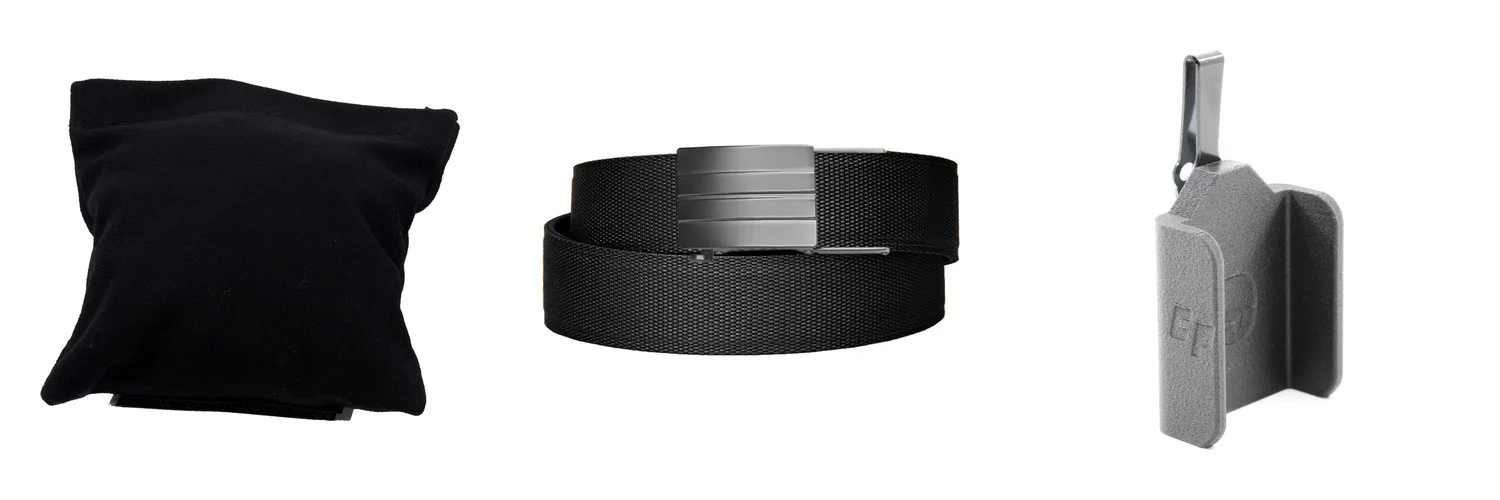
- A stiff belt: Kore says its tactical belts are “2X as stiff as our leather EDC belts.” The Kore Black Tactical Nylon Gun Belt we carry is 1.5″ wide and 5mm thick, rated by Kore for “Up to 10 lbs. • IWB, OWB or Appendix,” with a “Power-Core™ Center for Added Stiffness and Support.” See all Kore gun belts, or our concealed carry belt guide.
Taking the Holster Off Instead
When the gun has to come off your body, the Swift Silent Deadly blog removes the whole holster rather than the gun: “Instead of un-holstering the gun, I simply remove the whole holster. This ensures that the trigger remains covered, reducing the likelihood I’ll inadvertently pull it.” Putting it back, “the trigger is covered making it nearly impossible for it to be pulled by a stray piece of clothing.”
Practicing Safely
The NRA article’s practice rules: “Before holstering, check to ensure your gun is unloaded, and keep it unloaded throughout the exercise.” It also says: “Never practice drawing from concealment in a public space, even with an unloaded firearm.”
Our dry fire guide covers practicing at home.
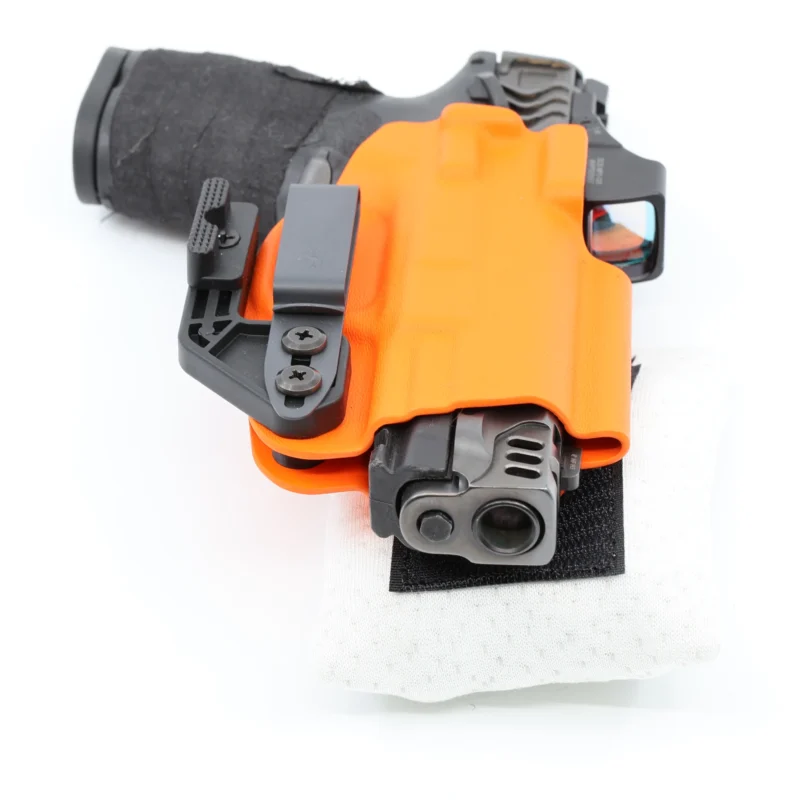
For inside-the-waistband comfort, the Cloudster Pillow holster wedge mounts to any IWB or AIWB holster with hook-and-loop, angles the grip into your body, and has memory-foam fill you can add or remove to set its thickness.
Holstering: Questions People Ask
What does holstering mean?
Putting a handgun back into its holster. Breach Bang Clear calls it “the draw stroke in reverse.”
Should you re-holster fast?
No, according to the NRA article, which says no one wins a contest for getting the gun back in fastest.
Why put your thumb on the slide?
The NRA article says it’s for safety and to make sure the gun seats properly in the holster.
Do striker-fired pistols need a safety to holster in USPSA?
NROI says their safeties are engaged as long as the finger stays off the trigger.
Written by the Cloudster Pillow team. We make the Cloudster Pillow and the Cloudster magnetic mag carriers, and carry Kore belts. We don’t sell holsters or firearms, and no maker paid to be mentioned here. This page summarizes published guidance from the sources named; it is general information, not a substitute for professional training, and not legal advice.