
Uncategorized
Leather Duty Belt: How Width and Load Rating Change the Wear
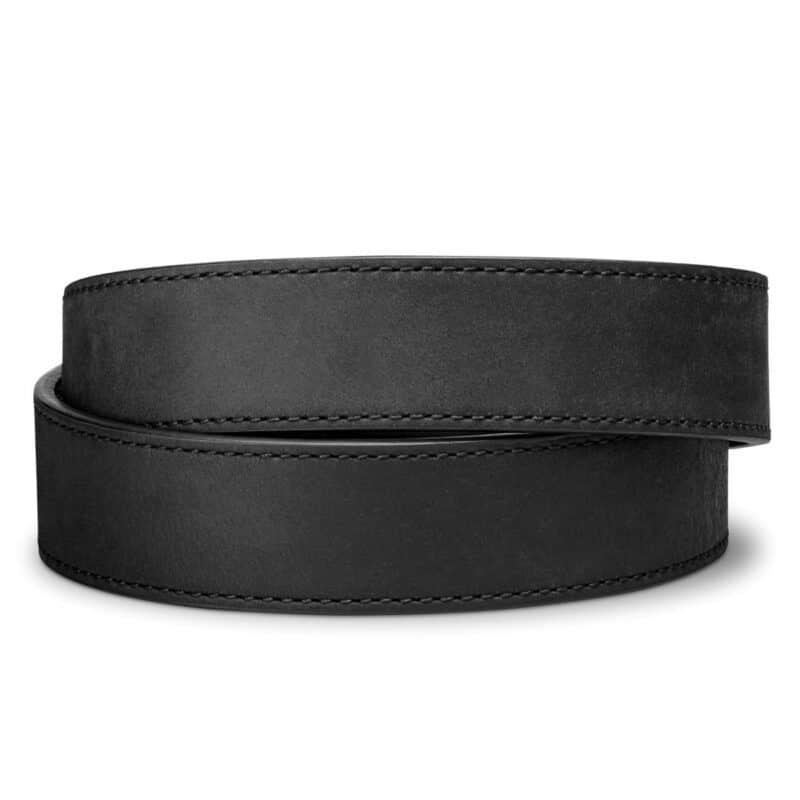
Many belt complaints are really load complaints. A gun belt that feels fine carrying a pistol and a spare mag becomes a hot spot the moment you hang a radio, cuffs, a light and a tourniquet off it. That is the job a leather duty belt is built for, and the difference between it and a dress belt has almost nothing to do with the leather. For the cuff case on that belt, see our handcuff holster guide.
A leather duty belt is a 2″ to 2.25″ reinforced belt built to carry a full duty load (Kore rates its duty belts for up to 30 lb) without folding, rolling or digging in. The extra width spreads that weight across your hips instead of concentrating it in a narrow band, and an internal stiffener keeps the belt from collapsing under a loaded holster.

That load is not a trivial thing to carry for a decade. In a NIOSH health hazard evaluation of a police department, 48% of officers reported low back pain in the previous three months, and the total weight carried and long hours seated were among the risk factors NIOSH identified. Width, stiffness and fit are the three levers you actually control.
How wide should a duty belt be?
Width is a load-rating decision, not a style one. Kore Essentials publishes load ratings by belt width, and the ladder makes the point better than any argument: a 1.5″ leather belt is rated up to 6 lb, a 1.5″ tactical is 10 lb, a 1.75″ battle belt is 20 lb, and the 2.25″ duty belt is rated 30 lb. Carrying a duty load on a 1.5″ belt is not under-building by a little. That gap is the entire reason a leather duty belt exists as a separate product instead of a thicker version of an everyday belt.
| Belt width | Typical use | Published load rating |
|---|---|---|
| 1.25″ | Slim EDC | 8 lb |
| 1.5″ leather | Everyday carry, dress | up to 6 lb |
| 1.5″ tactical / USA | Concealed carry, heavier pistol | 10 lb |
| 1.75″ garrison | Range, heavier setups | 10 lb |
| 1.75″ battle (MOLLE) | Battle belt / plate carrier | 20 lb |
| 2″ patrol duty | Patrol duty load | 30 lb |
| 2.25″ duty | Full duty load | 30 lb |
What makes a leather duty belt comfortable on a long shift
Three things, in the order they matter.
Load spread. A wider belt puts the same weight across more surface area. Moving from 1.5″ to 2.25″ does more for comfort than any amount of padding, which is why every duty-rated belt is wide before it is anything else.
Stiffness in the right direction. A leather duty belt needs to be rigid vertically so it will not fold over when a duty holster pulls down on it, while still wrapping the waist. That is what the internal stiffener does. A soft leather belt with no core rolls under load, and once it rolls the holster cants and everything above it starts pressing in.
Fit precision. A hole-punched belt only moves from hole to hole, and under a duty load one hole too loose lets the belt sag while one hole too tight cuts in. Kore’s ratcheting system micro-adjusts in quarter-inch increments, giving over 20 sizing positions, and Kore describes its 2.25″ belt as the world’s first micro-adjustable duty belt. The practical version: you can loosen a notch after an hour in a car seat and tighten it back afterwards, which no hole pattern lets you do.
We carry the Kore D1 2.25″ duty belt, whose outer belt is ArmorTek (Kore’s man-made leather alternative), at $159.95, in 24″–48″ and XL 48″–60″, and the kit includes a reinforced inner belt: you choose padded or non-padded at the same price, and Kore says the only difference is 2 mm of padding.
Leather, basketweave or nylon?
Kore’s duty belts come in a smooth ArmorTek finish, a basketweave pattern and nylon webbing. A uniform policy may set which one you can wear, and where it requires leather or basketweave, nylon won’t meet it.
The honest order of operations is to check what your department’s policy allows first and choose the material second. Kore rates every finish of its duty belts the same, up to 30 lb, and we sell them at the same $159.95 starting price. Kore’s own duty line covers both leather and basketweave in 2.25″, and the company states its belts are assembled in the USA with imported materials.
Once the belt is chosen, our duty belt setup guide covers where each piece of gear goes on it.
What a duty belt will not fix
A duty belt carries weight. It does not stop a rigid holster body from pressing into one specific spot when you sit, and it will not solve a hot spot at the hip bone. That is a padding problem rather than a belt problem — the same reason concealed carriers put a wedge behind the holster instead of buying a stiffer belt.
The distinction is worth getting right before spending money. If the complaint is “the weight is wearing on my lower back,” that is a width and load-rating problem, and a wider belt is the answer. If the complaint is “one specific point digs in,” widening the belt will not touch it, and the best leather duty belt on the market will not either.
Sizing a duty belt
Kore sizes its duty belts from your pant size, using the included sizing tape: “Lay the included sizing tape alongside the outer belt. Find your pant size on the sizing tape and cut the outer belt at that mark.” For the inner belt: “Find your pant size, subtract 1", and cut at that mark.” A micro-adjustable buckle leaves far more room for error than a hole-punched belt, but two details are worth knowing before ordering any leather duty belt: cut-to-size belts are not returnable once they have been trimmed, and Kore gives its belts a one-year manufacturer’s warranty (warranty claims go to Kore directly). If you are between sizes, our Kore belt sizing guide walks through measuring over a uniform.
If your carry is concealed rather than duty, the same width logic applies at a smaller scale — see our guide to the best concealed carry belt, or the tactical nylon belt comparison if you want the 10 lb rating without the leather.
Frequently asked questions
How wide should a leather duty belt be?
Two to 2.25 inches for a full duty load. Kore rates its 2.25″ duty belt at 30 lb against up to 6 lb for a 1.5″ leather belt, and that extra width is what spreads a loaded belt across the hips rather than concentrating it.
Can I use a regular leather belt as a duty belt?
Not for a duty load. A dress belt has no internal stiffener, so it folds under the weight of a holster and rolls at the waist. Once it rolls the holster cants and the pressure points start. A leather duty belt is reinforced specifically to resist that.
Is leather or nylon better for a duty belt?
Start with your department’s uniform policy, which may specify leather or basketweave. Kore rates its ArmorTek and nylon duty belts the same, up to 30 lb, and they cost the same.
Why does my duty belt still hurt if it fits?
Because width fixes load, not pressure points. A wide belt spreads weight across the hips, but a rigid holster body pressing into one spot is a padding problem — the same issue concealed carriers solve with a wedge behind the holster.
Source for the officer low-back-pain figures: NIOSH Health Hazard Evaluation Report 2017-0049-3367.
