Carry Techniques and Optimization
Shoulder Holsters for Concealed Carry: How to Choose and Wear One

Quick answer: A shoulder holster hangs your pistol under your support-side arm from a harness across your shoulders. It’s comfortable for long periods of sitting or driving, handles full-size pistols well, and takes the gun’s weight off your hips. The trade-offs are real: you need a jacket or overshirt at all times, the draw crosses your body, and some designs point the muzzle at people behind you. For most people it’s a situational holster rather than an everyday one.
What Is a Shoulder Holster?
A shoulder holster is a harness worn around both shoulders. The gun rides under one arm (the support side, so a right-handed shooter wears it under the left arm). The other side usually carries spare magazines, which also work as a counterweight so the rig sits level. You draw by reaching across your body, much like a cross-draw.
Types of Shoulder Holsters
| Type | How the gun sits | Good for | Watch out for |
|---|---|---|---|
| Horizontal | Parallel to the ground, muzzle pointing behind you | Compact pistols; a fast, short draw | The muzzle points at anyone behind you; heavy guns tend to sag |
| Vertical (muzzle down) | Grip up, muzzle pointing at the ground | Full-size and longer-barreled pistols | A longer draw; needs a longer jacket |
| Upside-down (muzzle up) | Grip down, held in by retention | Small guns in minimal rigs | Depends entirely on good retention |
| Chest holster | Centered on the chest | Hiking and hunting with a pack hip belt | Not really a concealment holster |
Experienced carriers generally put heavy, service-size pistols in a vertical rig and keep horizontal rigs for lighter, compact guns.
Tanker Holsters
A tanker holster is a World War II-style shoulder holster. One Quora answer explains: “The tanker holster is the WWII-era M3 shoulder holster for the M1911 handgun, or more generically shoulder holsters styled after it.” It describes “a leather under-the-arm holster with a single strap that went over the opposite shoulder,” issued to tank crews and later pilots “since the cramped nature of an armored vehicle interior or aircraft cockpit made the standard hip holster impractical.”
Several makers still sell versions:
- DeSantis calls its Tanker Holster “a replica of the WWII M-3 classic for the M1911,” in which “The government 1911 rides under the wearer’s arm secured in an embossed leather shroud.”
- 1791 says its M3 replica “uses a single strap to secure your gun over the shoulder and across the body,” with a strap “Adjustable from 48” – 54”.”
- El Paso Saddlery calls its tanker-style shoulder holster “ideal for hunters, ATV drivers, and helicopter pilots,” because “The pistol remains out of the way when sitting or using a rifle.”
RECOIL’s chest holster guide adds that the “M7 Shoulder Holster was often used more on the chest than under the shoulder.” For carry on the front of the body, see our chest holster guide.
Shoulder Holster Pros and Cons
Where a shoulder holster shines:
- Sitting and driving. The gun stays reachable with a seatbelt on and doesn’t press into a car seat or desk chair. Riders use them on motorcycles too; see our motorcycle holster guide.
- Bigger guns. Full-size pistols carry comfortably because the weight hangs from your shoulders, not your belt.
- Your back and hips. People with lower-back trouble often find that moving the weight to the shoulders helps.
- Cold weather. Under a heavy coat, a belt gun can be hard to reach; a shoulder rig under an open jacket can be easier. Some carriers wear a vest over a shoulder rig in mild weather; see our concealment vest guide.
- Packs and gear belts. It stays out of the way of a backpack hip belt or a loaded work belt.
Where it falls short:
- You always need a cover garment, and it has to hide the harness as well as the gun. Take the jacket off in a warm room and the rig is exposed.
- A slower draw. You reach across your body, clear the jacket and then the holster.
- Muzzle direction. Horizontal rigs point at people behind you, and a careless draw sweeps your own support arm. Some ranges restrict shoulder and cross-draw holsters for that reason, so check before you go.
- Close-contact retention. The grip sits forward under your arm, where someone in front of you can reach it, so trainers stress protecting it in close quarters.
- Fit. The harness has to be adjusted to your torso or it shifts, rubs and prints.
How to Wear a Shoulder Holster
- Adjust the harness first, with the gun unloaded. The holster should sit just below your armpit, snug enough not to swing when you walk but loose enough to breathe and reach.
- Balance it. Load the magazine pouches on the opposite side so the rig sits level and doesn’t twist.
- Use tie-downs if the rig has them. Straps that anchor the holster and mag pouch to your belt stop the rig from lifting on the draw.
- Choose a cover garment that stays closed enough to hide the harness but opens easily: an unbuttoned jacket, blazer or loose overshirt.
- Practice the draw slowly with an unloaded gun. Raise your support arm out of the way, sweep the jacket, get a full grip, and bring the gun forward without the muzzle crossing your arm or anyone behind you. Keep your finger off the trigger until the gun is on target.
- Re-holster with care. Look the gun in, keep your support arm clear, and never rush it.
What to Look For in a Concealed Carry Shoulder Holster
- A holster molded or sized for your exact gun, with full trigger guard coverage
- Reliable retention: a thumb break or tension adjustment, especially on horizontal or upside-down rigs
- A harness that adjusts to your chest size and a wide back plate or swivel so it moves with you
- Magazine pouches on the off side to balance the gun
- Tie-down points to your belt
- Soft, broad shoulder straps if you’ll wear it for hours
Leather rigs from long-established makers such as Galco are what most people picture, and several modern makers offer lighter nylon and Kydex versions. Try the fit before you commit; a shoulder rig that doesn’t fit your torso is miserable to wear. Our nylon holster guide covers nylon as a holster material.
Is a Shoulder Holster Right for You?
A shoulder holster makes the most sense if you spend a lot of your day driving or seated, already wear a jacket most of the time, carry a full-size pistol, or need to keep weight off your hips. If you want to carry under a single T-shirt, a waistband holster is the better tool. See our appendix carry holster guide or IWB holster guide. For every holster type side by side, see how to choose the best concealed carry holster. If you want a jacket-friendly belt option instead, read our OWB holster guide.
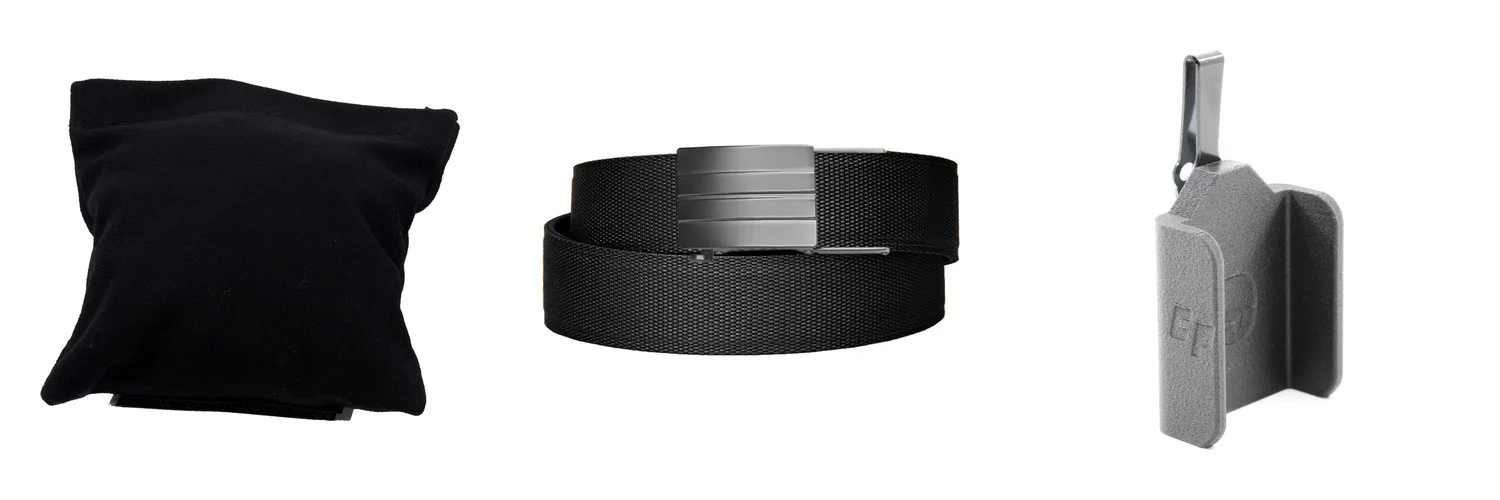
If you carry inside the waistband and it digs in when you sit, which is the most common reason people look at shoulder rigs, a wedge may solve it. We make the Cloudster Pillow, a soft, adjustable-fill memory-foam wedge that velcros to the back of an IWB or appendix holster to cushion the edge and tuck the grip in.
Quick Answers
Are shoulder holsters good for concealed carry?
They can be, if you always wear a cover garment and practice the draw. Most trainers see them as a situational choice (driving, seated work, cold weather, larger guns) rather than the best everyday option.
Which side does a shoulder holster go on?
Under your support-side arm: under the left arm for a right-handed shooter. You draw across your body with your strong hand.
Are shoulder holsters comfortable?
A well-fitted one is very comfortable for long periods, especially seated, because the weight spreads across both shoulders. A poorly adjusted harness rubs and shifts.
Are shoulder holsters legal?
Carry laws generally govern whether and how you may carry a concealed firearm, not the holster style. Check the laws where you live and any rules at the ranges and places you go.
Shoulder holster or chest holster?
A chest holster sits centered on your chest and works well with a backpack for hiking and hunting, but it’s hard to conceal. A shoulder holster rides under your arm and is designed to hide under a jacket.
Written by the Cloudster Pillow team. We make holster wedges and carry Kore gun belts. We don’t sell holsters or firearms, and no holster maker paid to be mentioned here. This is general information, not a substitute for professional training.