Holsters and Gear Recommendations
CCW Backpack Guide: Carrying a Handgun in a Backpack Safely
Quick answer: A CCW backpack is a backpack with a dedicated compartment for a handgun, often on the side against your back, with a holster or loop panel inside. It makes sense when you carry a full-size bag anyway: travel, range days, time away from home. Drawing takes extra steps a belt holster doesn’t, and the bag must stay under your control.
What Is a CCW Backpack?
It’s an ordinary-looking backpack with a gun compartment built in. In The Armory Life’s review of Vertx’s Gamut CCW Backpack, “The EDC compartment is located on the rear and can be unzipped from either side, making it ambidextrous.” Inside, the tester runs a holster plus a panel “that features bungee retention for magazines.”
Brands sell the pieces separately too. Maxpedition’s concealed carry range includes a “Sneak Universal Holster Insert With Mag Retention” and a “CCW-Enabled Bug Out Pack,” and hook-backed holsters stick to the loop panels many of these packs have; see our velcro holster guide.
When Does a CCW Backpack Make Sense?
When you’d be carrying a full-size bag anyway. The Armory Life’s tester puts it plainly: “the Gamut CCW is the best choice when I need a full-size bag anyway — travel days, range trips or extended time away from home.” If you’d rather keep the gun on your body under a hiking pack, see our hiking holster guide.
It’s an off-body method, and the same reviewer frames it that way: off-body carry “has a legitimate place in the conversation” only “if executed and managed properly, ensuring you retain control of your firearm at all times.” One USCCA community member describes using his EDC bag’s CCW compartment as an occasional option: “I don’t carry there as a general rule, but it comes in handy on occasion.” For smaller crossbody bags and purses, see our purse and crossbody bag guide.
Our page on off-body carry and its risks goes through what can go wrong. For everyday carry, an inside-the-waistband holster stays on your body; see our IWB vs OWB comparison.
CCW Backpack vs Sling Bag vs Fanny Pack
| CCW backpack | Sling bag | Fanny pack | |
|---|---|---|---|
| Size (Vertx examples tested by The Armory Life) | Gamut: 25 liters | Ghost Sling: 10 liters | Everyday Fanny Pack 2.0: 2 liters |
| Worn | On both shoulders | Across the body | At the waist or cross-body |
| Best for | “travel days, range trips or extended time away from home” | A medium bag that “looks like a tech bag, not a tactical one” | “situations where your attire is not suitable for carrying” |
| Our guide | This page | Sling packs | Fanny pack holsters |
Sizes from The Armory Life’s test of three Vertx bags.
What Features Should a CCW Backpack Have?
A dedicated compartment. Writing for Safariland, Scott Murdock describes the Viktos Counteract 15 as “a 15-liter backpack with a dedicated CCW compartment that deploys a rigid tray from a hidden compartment with the tug of a single strap”.
A holster mounted inside the bag. The Viktos bag “comes with a Hookie Holster attachment that mounts your IWB holster to the CCW tray with a hook and loop panel,” and Murdock wrapped its elastic retention straps around a Safariland Species holster, which fit. His summary of the result: “It’s rigid, secure, and covers the trigger — only this time it’s inside the pack rather than on my belt”. Murdock writes that holsters “offer the highest level of protection against trigger ingress”.
Durable fabric and hardware. Elite Survival Systems recommends high-denier nylon and says a pack made with 500D or 1000D nylon “will meet your everyday carry durability needs”; it also recommends quality stitching and heavy-duty zippers and pulls so you “won’t have to fumble around when you need to open the bag”.
A plain appearance. The same guide warns that a backpack that looks like it carries a weapon “can invite all kinds of trouble,” and recommends a discreet design that lets you blend into your surroundings.
How to Set Up a CCW Backpack Safely
- A holster that covers the trigger guard. The Armory Life notes the Vertx fanny pack’s insert “protects the triggerguard,” and adds: “For maximum safety and draw consistency, it might be best to opt for pairing a Kydex holster with this pack.” The same applies to a backpack.
- Nothing else in the gun compartment. Keys, pens and cables don’t belong next to a trigger. A tethered trigger guard holster is one way to keep it covered in a bag.
- Spare magazines fixed in place, for example with a mag carrier that mounts inside the bag with hook-and-loop velcro. The Gamut tester keeps “additional mags staged for reloads.”
- Control of the bag, always. Never hang it on a chair, leave it in a car, or hand it to someone else.
- Practice the draw with an unloaded gun: swing the pack around, open the compartment and draw, the same way every time.
Treat the Bag as a Holster, Not a Bag
Elite Survival Systems says that “having the right mindset while using a CCW backpack takes work,” and states the mindset this way: “Avoid handling the bag like it’s an everyday bag, and treat it respectfully as a holster”. Its guide says the primary safety concern with off-body carry is that “it’s easier to separate the gun owner from their weapon than on-body carry”.
Keep the bag on your body as much as possible and never leave it behind; if you take it off, keep it close and under your supervision. A pack set down and walked away from “can be grabbed by anyone, from a thief to an innocent child”. Murdock makes the comparison from the other direction: with a holster, “you don’t have to wonder if it’s moving around or if someone is trying to slip it away from you because it’s in contact with your body”.
Elite Survival notes that retrieving the gun from a backpack “will take a few more steps” than a waistband draw, and that you may need to swing the pack fully in front of you first. The guide says you can practice drawing and holstering at home, and to practice beyond dry fire it suggests asking a range near you whether it allows drawing from a CCW backpack. Murdock makes the same point about training: “we never rise to the occasion; we fall to the level of our training”.
Keeping Spare Magazines Organized
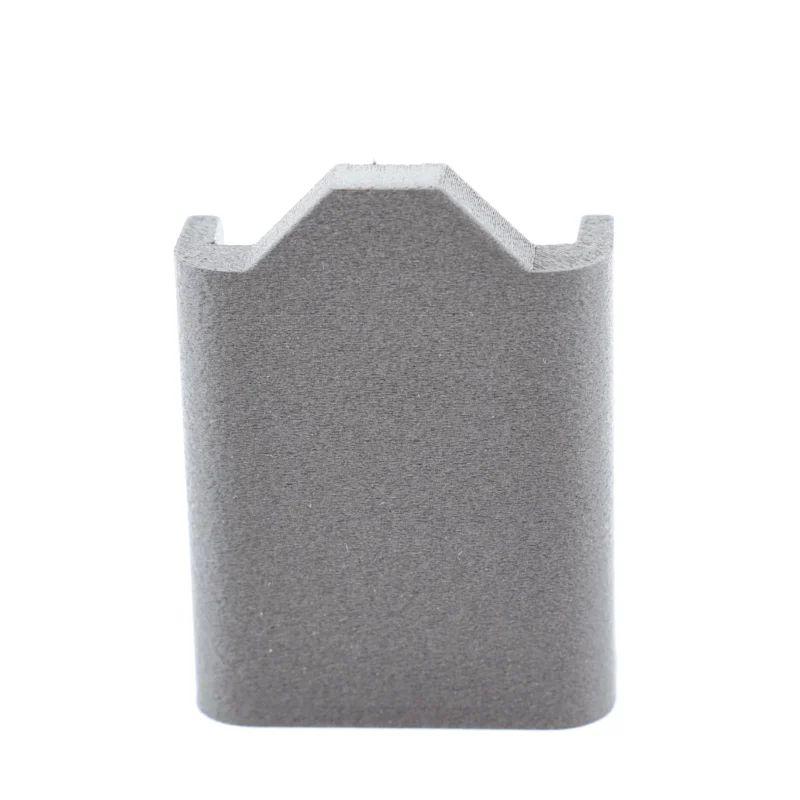
A magazine loose in a big compartment moves around. The Cloudster 9mm Magnetic Sling Bag Mag Carrier and the .45 ACP version hold one in a fixed spot: a flat carrier mounts inside the bag with the included piece of adhesive hook-and-loop velcro, and two magnets hold the magazine. The velcro ships uninstalled, so you choose whether the hook side or the loop side goes on the carrier.
Keep your spare magazine where you put it. 9mm carrier: Fits most 9mm and .380 magazines. .45 ACP carrier: Fits .45 ACP 1911-style single-stack magazines. Both are made in the USA, with free 30-day returns. See both sling bag mag carriers →
Permits and Off-Body Carry: Check Your Own State
This page does not state permit law, because the rules differ by state. The Florida Department of Agriculture and Consumer Services puts it directly: “Gun laws vary from state to state. When planning to travel with firearms, it is your responsibility to know and comply with the laws of the state you plan to visit”. The same page says that “questions regarding firearms laws in a particular state should be directed to law enforcement authorities in that state for clarification” (Florida Department of Agriculture and Consumer Services page, checked November 4, 2026).
The Texas Department of Public Safety gives similar advice to Texas license holders: if you are in a state that has reciprocity with Texas, “you must follow that state’s laws for carrying a handgun,” and “most states will have a website for their carry licenses or permits that specify their laws” (Texas DPS page, checked November 4, 2026). Before carrying a handgun in a backpack, open your own state’s official licensing page and confirm the current rule for carrying in a bag.
CCW Backpack: Questions People Ask
Is carrying a gun in a backpack safe?
Only with a holster that covers the trigger guard, a compartment with nothing else in it, and the bag under your control every moment.
Is a CCW backpack slower to draw from?
It takes steps a belt holster doesn’t: bringing the pack around and opening the compartment first. Practice makes it consistent.
Can a normal backpack work?
Only with a holster that stays fixed and covers the trigger guard, such as a hook-backed holster on an added loop panel. A dedicated CCW compartment is easier to keep organized.
Backpack or on-body carry?
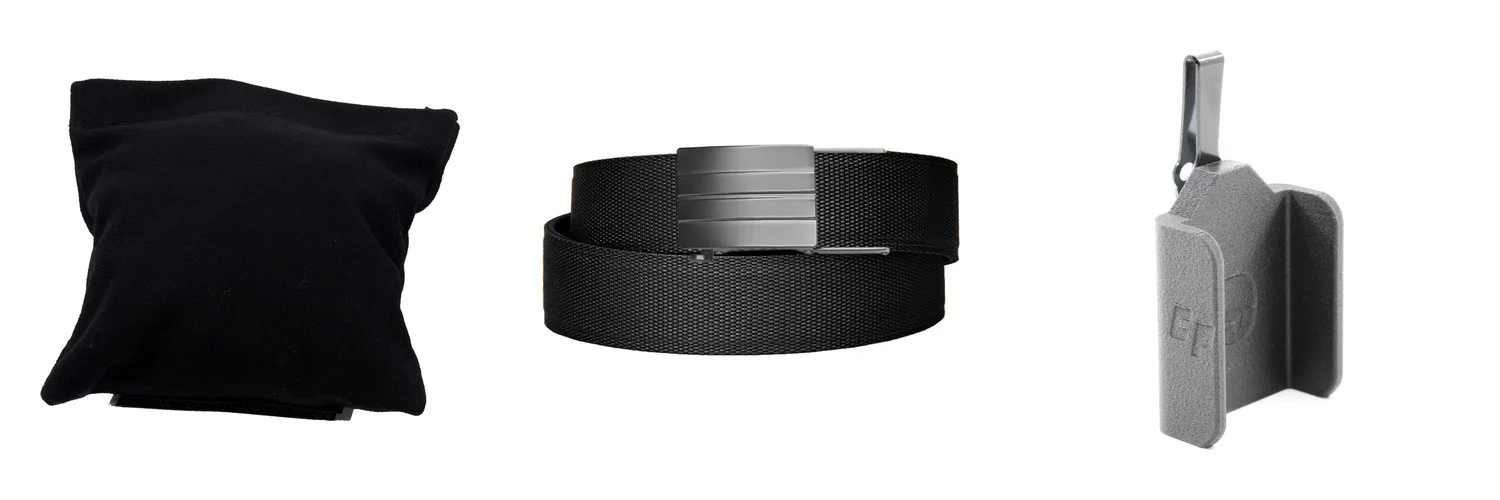
On-body carry keeps the gun with you even when the bag isn’t. A CCW backpack is a supplement for days you carry a big bag anyway. If IWB carry is your everyday method and the holster digs in, the Cloudster Pillow holster wedge mounts to any IWB or AIWB holster with hook-and-loop and has shredded cooling gel memory foam you can add or remove to adjust it.
Does off-body carry need the same permit as on-body carry?
Check your own state’s official licensing page (both pages quoted here were checked November 4, 2026). The Florida Department of Agriculture and Consumer Services says “gun laws vary from state to state” and directs questions to law enforcement in the state concerned. The Texas Department of Public Safety tells Texas license holders that “most states will have a website for their carry licenses or permits that specify their laws”.
Written by the Cloudster Pillow team. We make the Cloudster Pillow and the Cloudster magnetic mag carriers, and carry Kore belts. We don’t sell holsters, bags or firearms, and no maker paid to be mentioned here. This is general information, not a substitute for professional training; check the carry laws where you live.