Holsters and Gear Recommendations
Quick Draw Holster Guide: What Actually Makes a Draw Fast
Quick answer: A quick draw holster is set up for the fastest clean draw: close to your dominant hand, nothing to snag, and retention that holds the gun without slowing you down. For concealed carry that usually means appendix or strong-side IWB; for open carry and competition, OWB on a stiff belt. Speed comes from practice with that exact setup.
What Is a Quick Draw Holster?
Vulcan Arms describes it as a holster “designed to give you fast, smooth access to your handgun. Unlike some holsters that focus more on deep concealment or extra padding, quick-draw models focus on speed.” Alien Gear’s guide frames the goal around real-world defense, “not fantasy cowboy shootouts.”
The phrase also names a sport. Cowboy Fast Draw uses purpose-built western rigs; Mernickle says its rigs “comply with CFDA standards and feature the Safeleg° in every holster to prevent accidental firing.” This page is about carry and competition holsters, not cowboy rigs; for those, see our western holster guide. For the steps of a draw from concealment, see our how to draw a gun guide.
What Makes a Holster Fast
Alien Gear lists five demands for a quick-draw holster:
- “Zero snag risk – No excess fabric, hooks, or tight corners during the draw stroke.”
- “No clothing interference – Works with your wardrobe, not against it.”
- “Close to dominant hand – Reduces travel time and enhances instinctive draw.”
- “No restriction of movement – Allows you to move, crouch, and turn while drawing.”
- “Concealable (if needed) and secure – The holster must stay where you put it.”
Holster Types by Draw Speed
| Type | Alien Gear’s speed rating | Our guide |
|---|---|---|
| Appendix IWB | Fastest | Appendix carry |
| OWB | Very fast | IWB vs OWB |
| Paddle | Fast | Paddle holsters |
| Belly band | Moderate | Belly band holsters |
| Shoulder / pocket | Slow | Shoulder holsters |
| Ankle | Very slow | Backup only |
Vulcan Arms agrees on the trade-off: OWB holsters “tend to be the fastest and easiest to reach, but they can be harder to conceal,” while IWB models “offer a balance between concealment and access.”
Retention vs Speed
Every lock you add is a step on the draw. Vulcan Arms explains the two kinds: “Passive retention uses friction to hold the firearm in place, while active retention requires a strap, button, or level that must be released during the draw.” Alien Gear’s guide finds passive retention faster than “active retention systems with thumb breaks or rotating hoods.” For open carry in public, though, more retention is the safer trade; see our open carry holster guide and our guide to retention levels.
Speed Comes From Practice
Alien Gear: “Training matters. Practice your exact carry setup regularly to ensure speed, safety, and accuracy under pressure.” Practice with an unloaded gun in the clothes you actually carry in, and see our guide to drawing from under a tucked shirt.
The Belt Under a Fast Holster
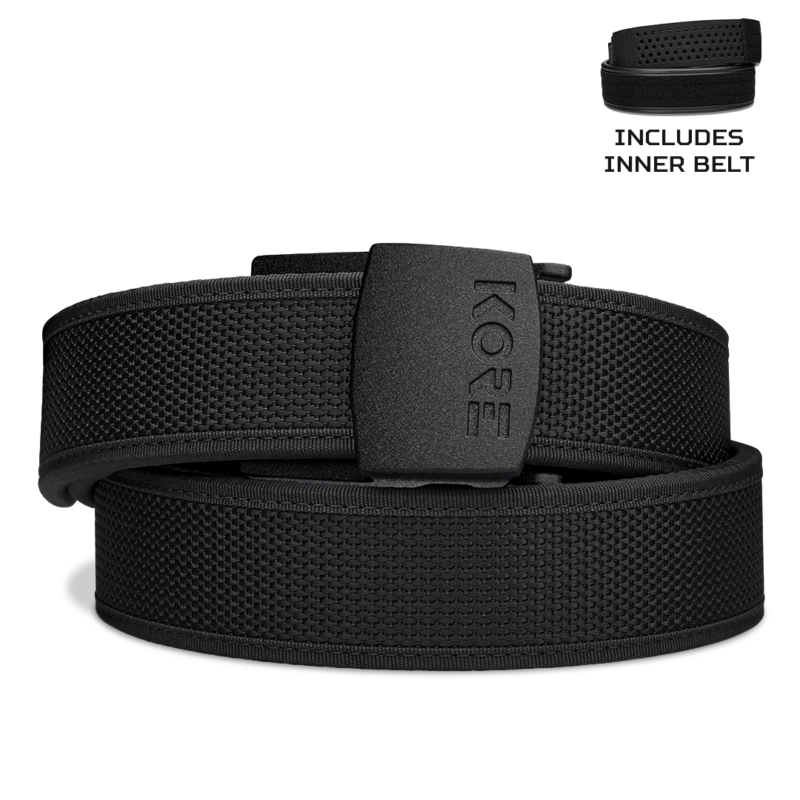
A holster that shifts slows the draw. For USPSA and IPSC, the Kore C1 Competition Belt we carry is a two-belt kit; Kore says its “hidden track with 20+ sizing points” adjusts “in small ¼” increments” so “you can tighten your rig as much as humanly possible, to hold your holster and gear rock solid.” Kore rates it “15+ lbs. / Competition Use,” at “1.5” / 6mm.”
Kore adds a rules note: its competition belts “are not permissible for IDPA matches,” because “IDPA regulations require that belts pass thru a minimum of 2 belt loops.” IDPA’s own rule, in the IDPA Rulebook 2026.2 §8.4 as published on November 2, 2026, reads: “Belts may be no wider than 1-3/4 inches or thicker than 5/16 inches and must pass through a minimum of all but two of the pant loops.” The USPSA division rules are in our competition pistol holster guide. For carry, the Kore gun belts are the 1.5″ everyday option.
Quick Draw Holster: Questions People Ask
What is the fastest holster position?
Alien Gear ranks appendix IWB fastest for concealed carry, with OWB close behind.
Does retention slow the draw?
Active retention adds a step to release. Passive friction retention is faster, but match it to where you carry.
What belt do competition shooters use?
Kore makes its C1 for USPSA and IPSC. Check your league’s rules. Kore says “IDPA regulations require that belts pass thru a minimum of 2 belt loops.” IDPA’s own Rulebook 2026.2 §8.4, as published on November 2, 2026, says: “Belts may be no wider than 1-3/4 inches or thicker than 5/16 inches and must pass through a minimum of all but two of the pant loops.” More in our competition pistol holster guide.
Is a quick draw holster the same as a cowboy fast draw rig?
No. Cowboy Fast Draw rigs are built for that sport’s rules, such as Mernickle’s CFDA-compliant rigs.
Written by the Cloudster Pillow team. We make the Cloudster Pillow and the Cloudster magnetic mag carriers, and carry Kore belts. We don’t sell holsters or firearms, and no maker paid to be mentioned here. This is general information, not a substitute for professional training; check the carry laws and match rules that apply to you.